

Bombay ceiba
- noun
- The Bombay ceiba produces large seed pods filled with silky floss, which can be harvested for kapok fiber.
Examples
-
The Bombay ceiba is often cultivated for its soft, silky kapok fiber used in pillows and mattresses.
-
The Bombay ceiba tree can grow over 100 feet tall.
-
Many artisans use the wood from the Bombay ceiba to carve traditional masks and sculptures.
-
Towering above the village, the massive Bombay ceiba serves as a shelter for birds and small animals.
-
Look at that magnificent Bombay ceiba over there!
-
Many artisans use the soft, silky kapok fiber from the Bombay ceiba to make comfortable pillows.
-
The trunk of the Bombay ceiba is deeply ridged, giving it a distinctive appearance in tropical forests.
Synonyms



 1
9.9
1
9.9
A large tropical tree that makes seed pods with silky fibers used for stuffing

A large tropical tree that makes pods with seeds covered in soft floss used to stuff pillows

A very large tropical tree with a thick trunk and seed pods of silky fibers
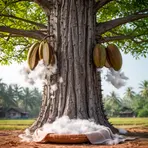
A very large tropical tree whose trunk has deep grooves and seed pods of soft, fluffy material used for stuffing

A very large tropical tree with a rough trunk and pods of soft fibers around seeds used for stuffing

A large tropical tree with a thick bumpy trunk that gives silky kapok fiber

A tall tropical tree with large bell-shaped flowers and seed pods full of silky fibers
Surface Forms
Morphology
This is a straightforward place-name + noun compound: 'Bombay' (a location) + 'ceiba' (a genus of tree) so a learner can infer it denotes a ceiba tree associated with Bombay. Toponymic species names follow a transparent compositional pattern cross-linguistically, so a B1 learner who knows both constituents would understand it refers to a type of tree even if they lack botanical detail.
Etymology
Bombay ceiba gets its name from the city Bombay and the tropical tree ceiba. The ceiba makes big seed pods full of soft 'kapok' fluff used in pillows and mattresses, so the name points to a large kapok tree known for its silky fiber.