
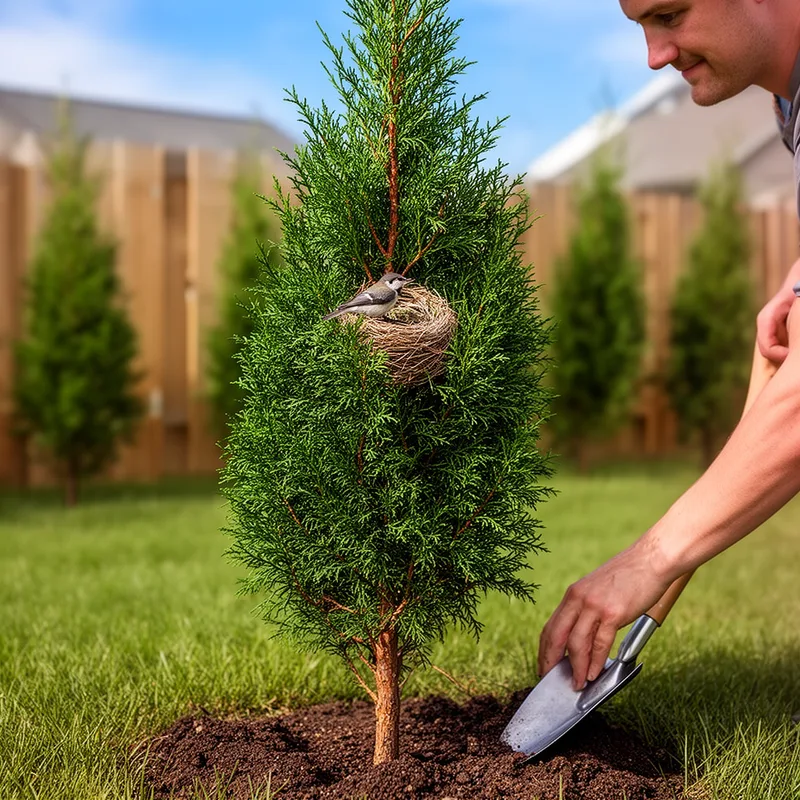
red cedar
- noun
- /rɛd ˈsiːdər/
- US
- We planted a row of red cedars along the eastern fence for privacy and shade.
- eastern red cedar
Examples
-
The red cedar tree is known for its aromatic wood, making it popular for construction and outdoor furniture.
-
The red cedar tree is known for its durability.
-
Many birds nest in the dense foliage of the red cedar tree.
-
The aromatic wood of the red cedar is often used to make chests and closets.
-
Many people love the scent of red cedar wood.
-
In Virginia, the red cedar can grow up to 50 feet tall and is commonly found in many eastern forests.
-
Gardeners often choose red cedar for its conical shape and resilience to harsh weather conditions.
Synonyms
A small evergreen tree with reddish-brown peeling bark and small sharp leaves

A small North American juniper tree with reddish-brown peeling bark and sharp needle-like leaves

A small tree with sharp needles and peeling brown bark that grows in eastern North America
Surface Forms
Morphology
The meaning is directly and compositionally derived from 'red' (a color) + 'cedar' (an aromatic conifer): a cedar that is red or has reddish wood. Color + noun combinations to name a variety or type are cross-linguistically common and follow a transparent, predictable pattern that a B1 learner who knows both words can readily infer.
Etymology
Red cedar was named by people who noticed the small tree's reddish, scented 'wood' and used 'red' for the colour and 'cedar' for the smell, so today red cedar means this smaller evergreen often used in gardens as a 'tree'.

