
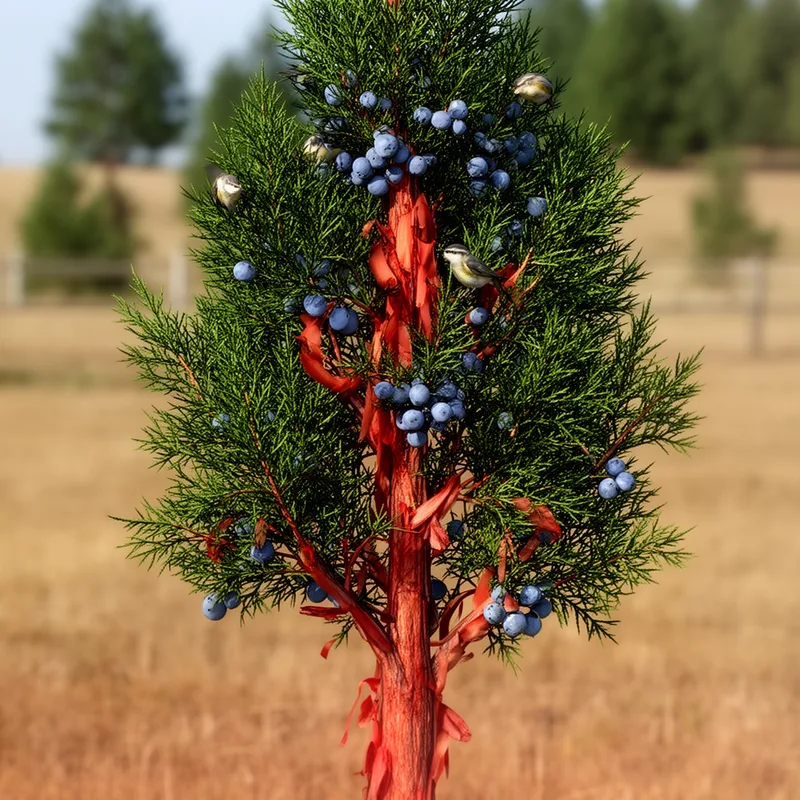
eastern red cedar
- noun
- /ˈiːstərn rɛd ˈsiːdər/
- US
- The eastern red cedar is a beautiful tree.
Examples
-
The eastern red cedar is often planted as a windbreak in rural areas.
-
I love the scent of eastern red cedar wood.
-
Birds are attracted to the blue berries produced by the eastern red cedar.
-
The aromatic wood of the eastern red cedar is used for making pencils and chests.
-
The small garden was adorned with an eastern red cedar, known for its fragrant wood and conical shape.
-
Carpenters often prefer eastern red cedar for outdoor projects because of its natural resistance to decay.
-
In the landscape, the eastern red cedar stands out with its reddish-brown bark and sharp needle-like leaves.
Synonyms
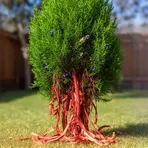
A small evergreen tree with reddish-brown peeling bark and small sharp leaves

A small tree with sharp needles and peeling brown bark that grows in eastern North America

A small evergreen tree with needle-like leaves that grows in eastern North America
Surface Forms
Morphology
The phrase is a straightforward descriptive noun phrase: 'eastern' (from the east) + 'red' (colour) + 'cedar' (a type of tree), so its referent—a cedar tree with reddish features found in eastern areas—is directly derivable from the parts. This adjective+noun composition is cross-linguistically common and follows normal English patterns, so a B1 learner who knows the constituents will readily understand it.
Etymology
Eastern red cedar got its name because early settlers saw its reddish wood and noticed a cedar-like smell, so they called it red cedar. The word eastern was added to show it grows 'east of the Rocky Mountains'.

