
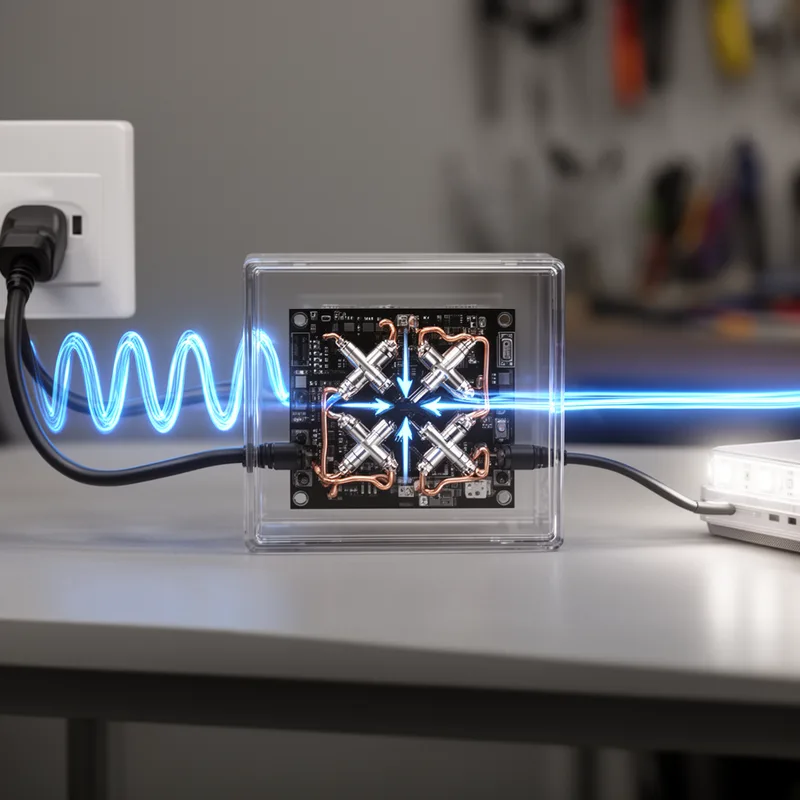
rectification
- noun
- /ˌrɛktɪfɪˈkeɪʃən/
- Specialized
- The engineer explained that rectification is essential for converting AC from the generator into usable DC power.
Examples
-
The VCV was rectified using half-wave rectification and was low-pass filtered using a fifth-order Butterworth filter with a 50-Hz cutoff frequency.
Academic text (2012) -
Second, rectification produces a non-zero-mean signal.
Academic text (1992) -
Again, over time, you're going to get rectification of that second depolarization.
-
During the lecture, he discussed how rectification allows electrical devices to function smoothly with direct current.
-
The circuit underwent rectification to ensure that the current was suitable for the devices connected.
Surface Forms
Morphology
Etymology
Rectification comes from the Latin root rectus, meaning 'straight' or 'right', and it is like the word direct which suggests a straight line. In electronics, rectification changes alternating current into direct current, so the origin helps you remember it 'straightens' the flow of electricity into one direction.

