
reconstructionism
- noun
- /ˌriːkənˈstrʌkʃənɪzəm/
- Formal
- Through reconstructionism, linguists attempt to piece together lost languages from surviving records.
Examples
-
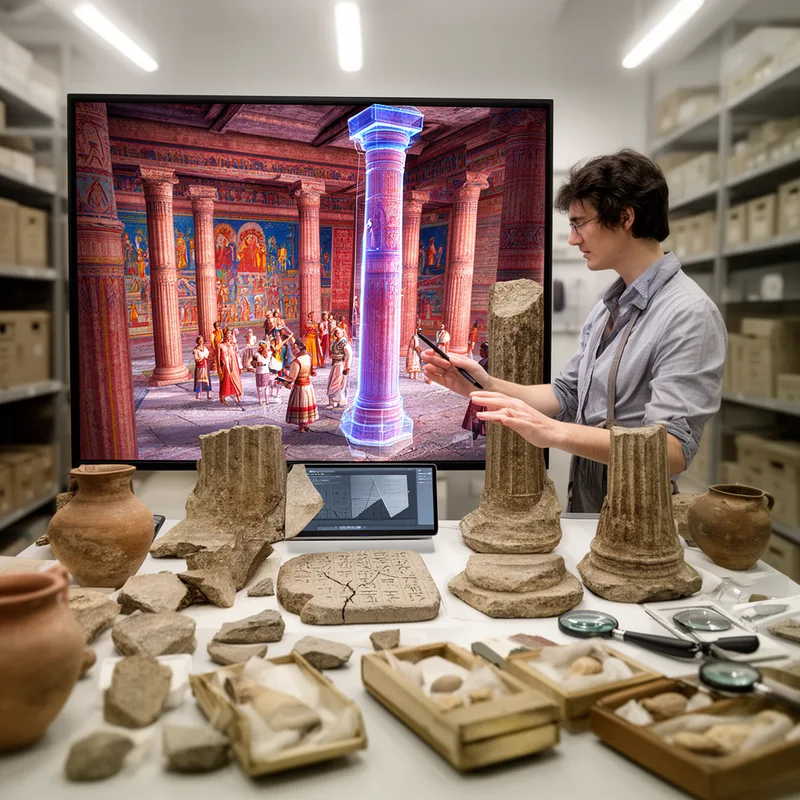
Modern reconstructionism often combines technology and traditional research to recreate historical environments.
-
The museum's approach to ancient artifacts is based on reconstructionism to help visitors imagine the original sites.
-
The study of reconstructionism has gained popularity in recent years.
-
Many historians embrace reconstructionism to understand ancient civilizations.
-
Through reconstructionism, historians aim to rebuild the context of ancient societies using limited archaeological findings.
-
Many scholars utilize reconstructionism to infer the cultural practices of prehistoric communities from existing artifacts.
-
The method of reconstructionism allows researchers to hypothesize how ancient languages were spoken based on available written records.
Synonyms

 8
4.4

A version of events made from pieces of evidence
How Certain

Surface Forms
Morphology
reconstructionism = reconstruction (semi-transparent) = re + construct + ion + ism
The form suggests a system or practice of reconstruction, but the specialized scholarly-method sense is not fully predictable.
Etymology
Reconstructionism comes from re- 'again', construct 'to build', and -ism 'a method or belief'. Think of museum experts or language researchers 'building again' a lost building, language, or idea from small pieces of evidence, which is why reconstructionism also means the method of rebuilding or inferring the past.