

to reconceptualize
 1
8.1
1
8.1

- verb
- /ˌriːˌkɒnˈsɛptʃuəlaɪz/
- Formal
- Technology offers us the opportunity to take another look at learning and to reconceptualize teaching.
- need to reconceptualize
- reconceptualized curriculum
Loading YouTube…
Watch on YouTubeSo rights are not gotten rid of, but they're reconceptualized.
- So rights are not gotten rid of, but they're reconceptualized.
- Confronted with long standing widespread problems, she reconceptualizes the issues, bringing a fresh perspective that leads to innovative solutions.
- Get it out, process and then reconceptualize.
Examples
-
Clearly, there are stirrings of a movement to reconceptualize the nation's testing agenda.
Academic text (1990) -
We need to reconceptualize our approach to education to better engage students.
-
In the long run, we may need to reconceptualize the rules protecting academic freedom.
Academic text (1997) -
These are ways in which science and technology studies have begun to reconceptualize land itself.
-
I simply think that we have to reconceptualize how we identify LD.
Academic text (2006) -
Social historians need to reconceptualize American sport history along three lines.
Academic text (1993) -
So we have to reconceptualize who's in charge, who owns pain?
-
The issue here is not only to recognize women's agency but also to reconceptualize state power.
Academic text (2005) -
First, institutions can reconceptualize their assumptions of proper test parameters.
Academic text (2004) -
He invited his readers to utterly reconceptualize their ideas about the world and our human place in it.
Synonyms
 66
4.9
66
4.9
To give something a new meaning that changes how people see it
 14
4.8
14
4.8
Change the way you think about something to see it in a better way
 12
6.5
12
6.5
Make people see something in a very different way
 10
5.8
10
5.8
To explain something again in a different way to give it a new meaning
 9
4.7
9
4.7
Think of something in a new way
 1
7.4
1
7.4
Think about or plan something in a new way


 1
7.0
1
7.0
To change an idea, story, or image to fit a new setting
 1
8.3
1
8.3
Putting something in a new setting changes its meaning
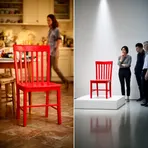
To place something in a new context so people see it differently
How Different

Surface Forms
Morphology
reconceptualize = conceptualize (semi-transparent) = re + concept + ual + ize
For learners who know 'conceptualize', adding 're-' clearly gives the sense of thinking about something again or in a new way.
Etymology
Reconceptualize is made of re- 'again' and concept 'idea', with -ize making it a verb. So, to reconceptualize is to form a new idea about something or to think about it again in a very different way.