

recombination
 3
7.9
3
7.9

- noun
- /ˌriːkəmˈbɪneɪʃən/
- Specialized
- Analysis of a PKD1 family from northern Spain revealed recombination between the microsatellites and the disease locus in one individual.
- recombination rate
- genetic recombination
- homologous recombination
Examples
-
Chromosome segments are inherited as a result of Mendelian segregation and recombination events throughout an individual's ancestry.
Academic text (2016) -
The next item we want to talk about following the history of the early universe is recombination and decoupling.
-
We're moving on to recombination that rearranges the DNA.
-
A recombination test showed only limited genetic recombination at the gp60 locus.
Academic text (2013) -
The integration of transgenes by homologous recombination alleviates secondary problems caused by endogenous gene disruption in transfected cells.
Academic text (1992) -
Mammalian genomes contain 500-1,000 olfactory receptor genes, subject to extensive genetic recombination (Buck, 1996; Hasin-Brumshtein et al., 2009).
Academic text (2017) -
The process of recombination allows offspring to inherit unique traits from both parents.
-
During reproduction, genetic recombination mixes material, leading to diverse characteristics in the young.
-
Researchers study recombination to understand how genetic traits are reshuffled between generations.
Synonyms
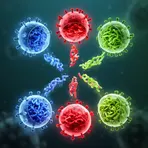
The mixing of genes from different viruses to create new virus types
How Mixed
- Specialized

- Specialized
3
7.9
1
5.5
51
1.8

 1
3.0
1
3.0
Surface Forms
Morphology
Etymology
Recombination starts with the prefix re- meaning 'again' and the root combine meaning 'to join together'. In genetics, recombination is the joining together again of gene parts to make new mixes of traits, so the name explains why offspring can have new combinations of features.