

recessive
 7
6.7
7
6.7

- adjective
- /rɪˈsɛsɪv/
- Specialized
 :
recesivo
:
recesivo
- A recessive gene only shows its effects when an individual inherits two copies from their parents.
- autosomal recessive
- recessive gene
- recessive allele
So I have a double recessive NTHFR gene in my body.
- So I have a double recessive NTHFR gene in my body.
Examples
-
Mendel argued that traits in organisms derived from genetic pairs that were dominant and recessive.
Academic text (2005) -
Of course, she knows it means one dominant and one recessive gene.
-
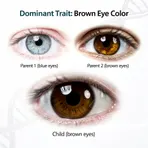
It's more of a recessive gene like eye color or blood type.
-
It's a recessive gene carried down through families.
-
Only a 25 percent chance if the mother had a recessive gene for blue eyes.
Fiction book (1990) -
It's caused by two recessive genes... and happens to the offspring of normal parents.
-
Study and discuss dominant and recessive gene characteristics and look at your own family tree.
Academic text (1995) -
Sickle cell disease is a lifelong autosomal recessive disorder.
Academic text (2003) -
Hereditary PXE is a rare disorder that is autosomal recessive in nature.
Academic text (2007) -
Approximately 60-80% of those with retinitis pigmentosa inherit it by an autosomal recessive transmission (Brilliant, 1999).
Academic text (2004)
Antonyms
Compounds

- Specialized
2
4.0
A part passed from parents that causes a feature only if two copies are present

- Specialized
A genetic condition caused when a child gets two faulty copies of the same gene on a non-sex chromosome

- Specialized
A disease that appears when a child gets two copies of a faulty gene on a non-sex chromosome


- Specialized
A pattern where a gene on the X chromosome causes males to have a trait and females to be carriers
How Dominant

Surface Forms
Morphology
Etymology
The word recessive comes from the Latin parts re- meaning 'back' and cedere meaning 'to go', like in the words recede and recess. So a recessive gene is 'pushed back' or hidden by a dominant one and only shows when it is not blocked.