

reader
 679
1.0
679
1.0

- noun
- /ˈriːdər/
- The purpose of this article is to introduce readers to a narrative school counseling perspective.
- an avid reader
- young readers
- books for readers
Loading YouTube…
Watch on YouTubeWhat actions must be taken so that dyslexic readers are not left behind?
- What actions must be taken so that dyslexic readers are not left behind?
- He's going to provide us, his readers, with some explanations.
- Putting yourself in the position of the reader, I think, is key.
- I've really been kind of on and off reader since I was a kid.
- Not your directing eye, your reader eye, your audience eye.
- The goal is to help the the reader see reality.
- They almost spent all of their time talking about you, the reader, and your mindset.
- Would that make as much sense to other English readers in the world?
- So like the the reader can like feel like they could be her.
- And then the subtitle asks you, the reader, a question.
- Write compelling content for your blog that readers will love.
- Yet we live in a world of headline readers versus practitioners.
Examples
-
Write compelling content for your blog that readers will love.
-
School librarians know there is a book for every reader and a reader for every book.
Academic text (2015) -
But you, the reader, because you are the reader, are always alive.
-
Putting yourself in the position of the reader, I think, is key.
-
And she was one of the readers of my first book.
-
I really want to understand... and then all my readers could understand, too.
-
Text features stand out and are important for readers to look at and understand.
Academic text (2013) -
Actually, this is a matter that concerns a great many readers, as my mail shows.
Academic text (2017) -
I think we have an obligation to our readers to do something about this.
Academic text (2017) -
As an avid reader, she spends hours exploring different genres of literature.
Synonyms
 14
3.2
14
3.2
A person who loves reading and spends a lot of time with books
 3
1.4
3
1.4
A person who loves reading and collecting books
 2
8.8
2
8.8
A person who loves books and collects them, often rare or old
 1
1.0
1
1.0
A person who regularly reads books for pleasure


 1
2.5
1
2.5
A person who likes reading and collecting books
 1
8.9
1
8.9
A person who loves books and reads or collects many of them

A person who reads many books for pleasure
Antonyms

Compounds
 16
6.3
16
6.3
A person who seems to know what other people are thinking, often using tricks or guessing



- Jargon
1
8.6
A person chosen by a church leader to lead readings, prayers, and short talks



- Texting
1
7.4
A computer program that predicts what a person wants or will do from their data


- Texting
1
3.4
An app that collects news from many sites and shows headlines or reads them aloud to users
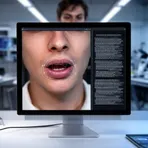
- Specialized
A program or device that looks at lip movements in video and turns them into text



- Archaic
A machine that looks at holes in a long paper strip to get computer instructions
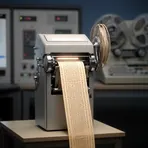



How Avid

Surface Forms
Morphology
Etymology
Reader comes from the old verb read, which means 'to look at written words'. So a reader who enjoys books is simply someone who reads for pleasure.