

mind reader
 16
6.3
16
6.3

- noun
- /maɪnd ˈriːdər/
- I'm not a mind reader, you know.
- a kind of mind reader
Loading YouTube…
Watch on YouTubeObviously you can't be a mind reader, but goodness knows that you've tried.
- Obviously you can't be a mind reader, but goodness knows that you've tried.
- It's like falling prey to a very, very clever mind reader.
- All right, so I guess I'll have to confess I'm not a mind reader, but I also did not cheat.
- But even that doesn't work unless you also become a mind reader, And even then, because you wouldn't.
- And you have to be willing to express express to the other because they're not also not mind readers.
Examples
-
As a skilled performer, the magician claimed to be a mind reader, astonishing the audience with his seemingly supernatural insights.
-
So many people expect their partner to be a mind reader and then not.
-
What are you, a mind reader?
-
You must be a mind reader.
-
I never knew you were a mind reader.
-
My friend, you should be a mind reader.
-
Women assume men are mind readers.
Academic text (2005) -
I'm not a mind reader.
-
I didn't know you were a mind reader.
-
Managers aren't mind readers, and they need honest, constructive feedback.
Blog text (25)
Synonyms
 259
8.9
259
8.9
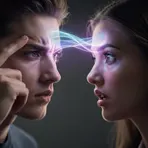
A person who can read and send thoughts without speaking
 208
7.3
208
7.3
A person who says they can know things beyond normal senses, like predicting the future
 5
8.2
5
8.2
A performer who seems to read people's thoughts using tricks

A magician who seems to know what people think by using tricks

A performer who pretends to read minds by using secret signals from an accomplice

A person who says they can share thoughts without using the senses
How Perceptive

Surface Forms
Morphology
mind + reader
The compound 'mind reader' is directly built from 'mind' (thoughts) + 'reader' (an agent who reads), so its meaning 'someone or something that reads/predicts minds' is transparently derivable from the constituents; although metaphorical when applied to AI, the composition follows a common agent + object pattern found across languages. A B1 learner who knows 'mind' and 'reader' would readily infer the intended sense.
Etymology
Mind reader comes from the image of someone reading a mind like a book. Magicians watched small signs and seemed to 'know' what people were thinking, so a person who did this was called a mind reader.