
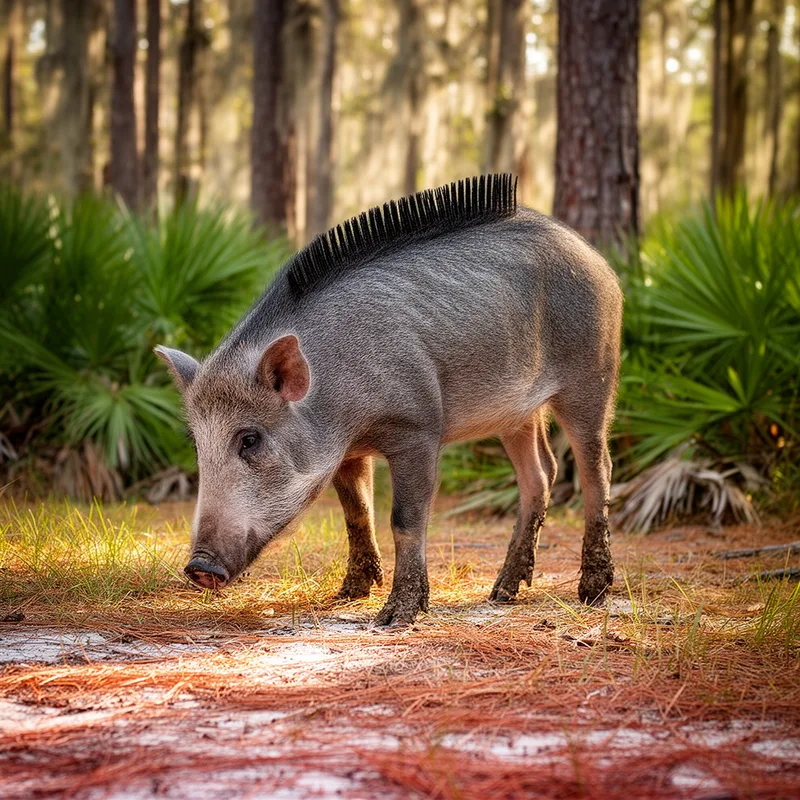
razorback
 1
9.3
1
9.3

- noun
- /ˈreɪzərˌbæk/
- Specialized
- While hiking in the woods, we spotted a large razorback roaming among the trees.
- razorback hogs
- razorback boar
Examples
-
The razorback is known for its distinctive ridged back and long legs, making it a unique sight in the southeastern U.S.
-
An estimated 8,000 razorbacks still live in Lake Mojave, most resulting from releases of hatchery-raised fish, but this is down from 65,000 two decades ago.
Academic text (2001) -
Quick, dad, there's a big razorback up there.
-
I wouldn't feed this garbage to a razorback hog.
-
Today, there are approximately 8,000 razorbacks, most resulting from releases of hatchery-raised fish.
Academic text (2001) -
Bivalve meat for Grampa Cody's razorbacks, said his dad.
Fiction book (1996) -
Additionally, FWS biologists are raising razorbacks in ponds at the Bill Williams refuge.
Academic text (2001) -
Local hunters often speak of their encounters with a razorback in the dense forests of Arkansas.
Synonyms
A wild pig with a thin body, long legs, and a ridged back found in the southeastern United States

A wild pig with a raised ridge along its back that lives in the southern United States
Compounds
A wild pig with a thin body, long legs, and a ridged back found in the southeastern United States
Surface Forms
Morphology
Etymology
Razorback comes from the parts razor and back, meaning a 'sharp back'. In the southern United States, people called wild hogs razorbacks because their thin bodies and raised spine make a sharp ridge along the back, so the name shows the animal's look.