
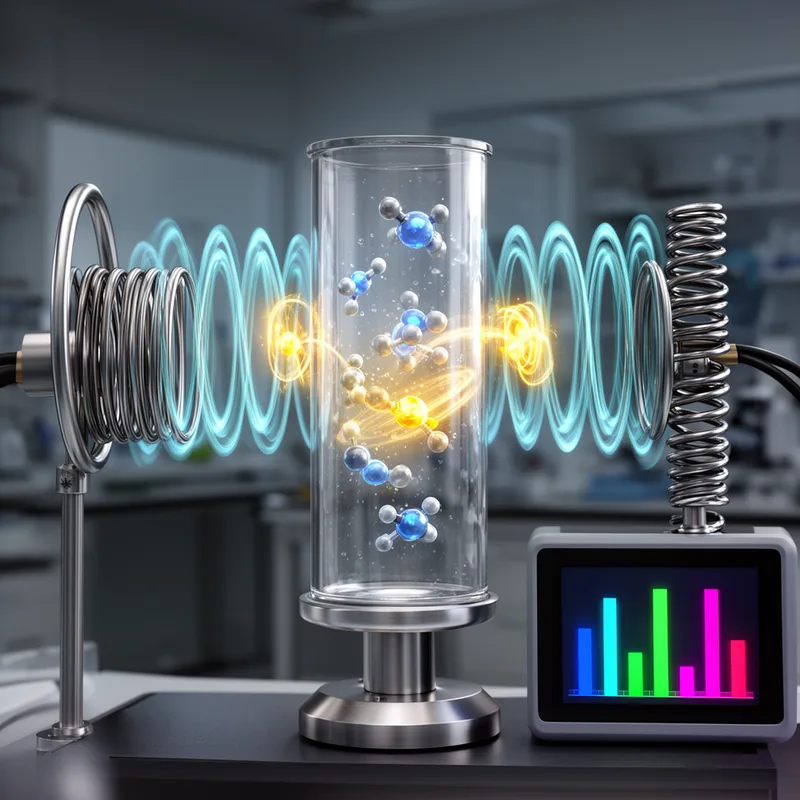
radio-frequency spectroscopy
- noun
- /ˈreɪdioʊ ˈfrikwənsi spɛkˈtrɒskəpi/
- Specialized
- To detect the saturation of the mean-field energy in their degenerate Fermi gases, the Boulder and MIT teams introduced a new experimental technique: radio-frequency spectroscopy.
Examples
-
In their latest experiment, the team employed radio-frequency spectroscopy to measure energy levels with remarkable precision.
-
With radio-frequency spectroscopy, scientists can observe energy shifts in atoms more accurately.
-
The researchers used radio-frequency spectroscopy to analyze the molecular transitions in the gas sample.
Surface Forms
Morphology
radio-frequency + spectroscopy
The meaning is directly compositional: 'radio-frequency' specifies the band of frequencies (radio-range) and 'spectroscopy' denotes a method for analyzing spectra, so together they mean spectroscopy performed at radio frequencies. This is a predictable technical compound rather than an idiom, so a learner who knows the constituents can infer the overall meaning.
Etymology
Radio-frequency spectroscopy gets its name from the image of tuning a radio: scientists choose a radio frequency like selecting a station to hear a different signal, and spectroscopy is the act of 'looking' at those signals to learn about tiny parts. So the phrase means studying small energy changes in atoms or molecules by using radio waves.

