

quiescent
 1
8.7
1
8.7

- adjective
- /kwɪˈɛsənt/
- During winter, the garden appears quiescent, with bare branches and no blooming flowers.
- remained quiescent
- relatively quiescent
- more quiescent
Loading YouTube…
Watch on YouTubeAnd at any one moment in time, most are quiescent, most are not activated.
- And at any one moment in time, most are quiescent, most are not activated.
- And I have a question about the neural stem cell, the activated and the quiescent one.
- So again, it's kind of violating this idea that our mind is dormant and our body is just simply quiescent and and resting.
- It seems like too tumultuous an environment for a quiescent planetary disk, circumstellar disk, to form planets from.
Examples
-
The Eddy currents disappear and it just returns to a quiescent, dull, boring equilibrium.
-
Moreover, some sects are quiescent because they have rejected this world and have focused on the next.
Academic text (1993) -
Very likely, it would lie almost quiescent when no one was about.
Fiction book (2002) -
"If it's an animal, it's either in a quiescent, resting phase... or it's dead."
Fiction book (1995) -
Nevertheless, this community has, for the most part, remained quiescent in areas of self-government.
Academic text (1990) -
A bubble about 2 cm in diameter stands at the surface of a quiescent liquid.
Academic text (2006) -
Moreover, the central institutions of civil society are quiescent and fragmented in most African countries.
Academic text (1992) -
Yet despite the widespread attention these economic woes received, the Japanese public remained strangely quiescent.
Academic text (2001) -
And it's during deep sleep that we actually shift over from that fight or flight branch to the more quiescent calming branch called the parasympathetic nervous system.
-
And normally during quiescent periods, you have things growing in the lagoon and in the marsh, and they die and they settle down, they 'cause they create this very nice rich organic mud.
Synonyms
 17
4.0
17
4.0
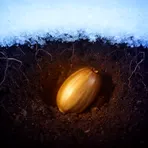
Not active now but alive and able to become active again, for example a volcano or seed
 4
2.3
4
2.3
Not moving and not showing much physical or mental energy
Antonyms


How Active

Surface Forms
Morphology
quiescent = quiesc + ent
The adjective is formed from a Latin combining form plus the suffix '-ent' and does not contain a recognizable modern English base that learners can use to infer meaning.
Etymology
Quiescent comes from the Latin root quies meaning 'rest' and is the same root as quiet, so imagine something very still and calm. That's why quiescent describes something 'not active' or at rest.