
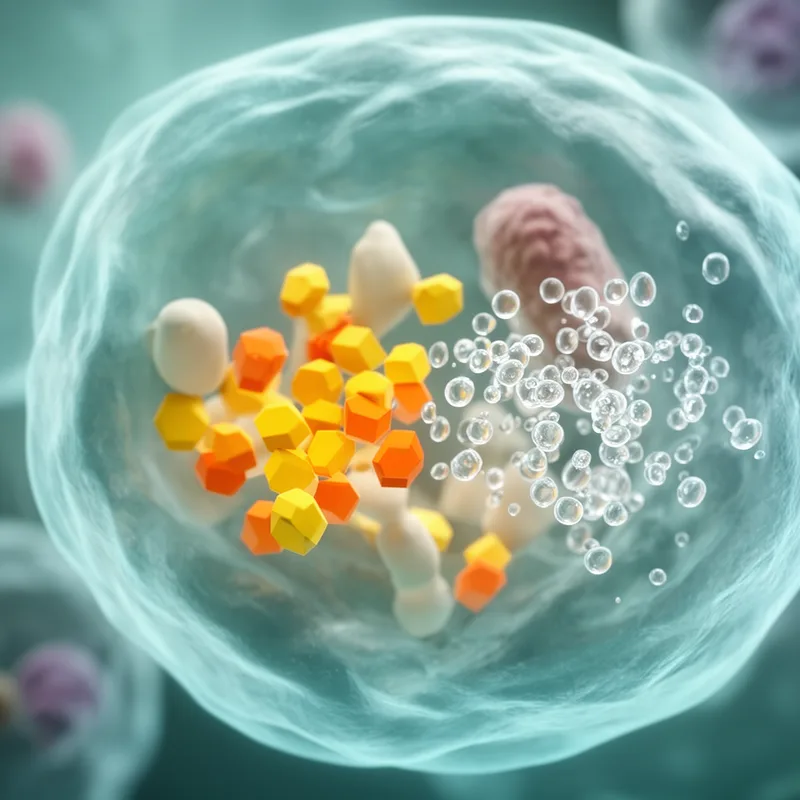
pyruvic acid


 1
6.5
- noun
- /paɪˈruːvɪk ˈæsɪd/
- Specialized
- The body produces pyruvic acid during glycolysis.
Examples
-
During fermentation, the pyruvic acid produced during glycolysis is converted to either ethanol or lactic acid.
-
During glycolysis, glucose is broken down to pyruvic acid, yielding 2 ATP of energy.
-
After glycolysis, glucose is broken down into pyruvic acid in the cytoplasm of the cell.
-
Researchers measured the concentration of pyruvic acid during the fermentation process.
-
Under anaerobic conditions, pyruvic acid is converted into lactic acid.
-
In fermentation, pyruvic acid is converted into ethanol.
-
Alcohol fermentation also begins with glycolysis to produce two molecules of pyruvic acid, two molecules of ATP, and four electrons.
Synonyms
 1
8.0
A chemical made when cells break down sugar to make energy
Surface Forms
Morphology
The phrase is compositionally formed (adjective + noun): a B1 learner who knows 'pyruvic' as relating to pyruvate/ metabolism and 'acid' will understand it denotes a kind of acid associated with pyruvate. However, 'pyruvic' is a technical biochemical term and the precise, specialized meaning (its role in glycolysis and specific chemical properties) is not recoverable from general English knowledge, so the phrase is only partially transparent.
Etymology
The noun pyruvic acid comes from old chemistry words where the first part (pyruv-) links to 'fire' because early chemists made similar substances by heating materials, and the second part means 'acid'. So the name gives a simple picture: a small acid that appears when larger molecules are broken down, like after glucose is split in metabolism.