
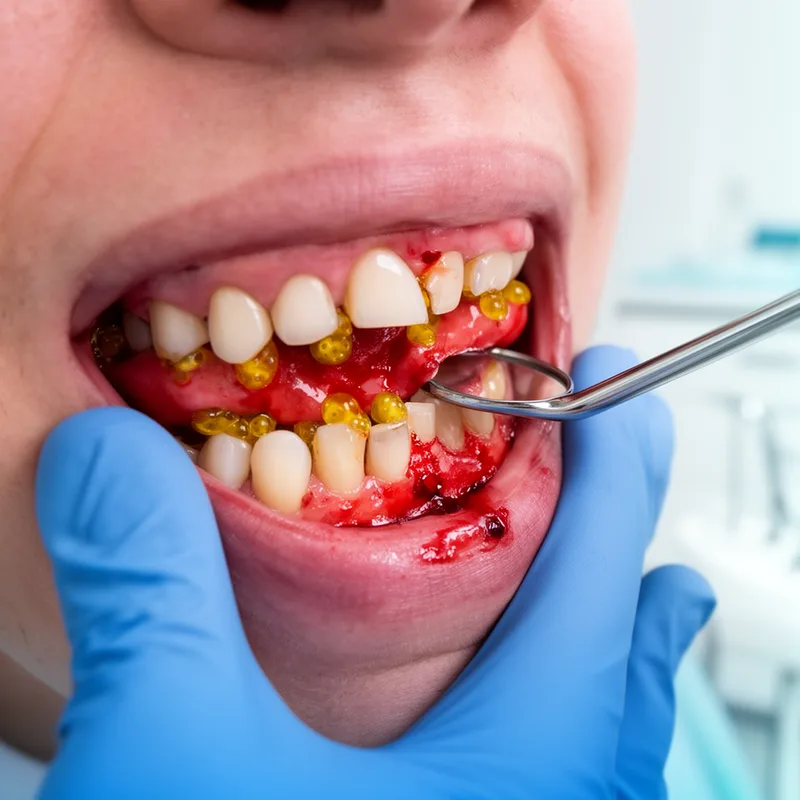
pyorrhea


 1
9.9
1
9.9
- noun
- /paɪəˈriə/
- Archaic
- Regular dental check-ups can help prevent pyorrhea and maintain gum health.
Examples
-
"uneven tire wear, pyorrhea, gonorrhea, diarrhea,
-
I have three or four abscesses... a touch of pyorrhea... nine or ten cavities...
-
But his hair thinned, turned gray; he got pyorrhea and had such trouble that he had all his teeth out; he had all those valve problems, a bypass, was laid up for a year stretched out on his recliner, and virtually never left it until, out of the blue, he left her.
Fiction book (1992) -
Pyorrhea can cause painful symptoms and should be treated by a pyorrhea by a dentist.
-
If left untreated, pyorrhea may lead to serious complications including tooth loss.
Synonyms
 1
8.4
1
8.4
A serious gum infection that damages the tissue and bone that hold the teeth
 1
9.3
1
9.3
A very painful gum infection that causes mouth sores, bleeding and bad breath

A severe gum infection that makes pus and loosens teeth

A long-lasting gum disease that makes teeth loose and may cause tooth loss
Compounds
How Severe

Surface Forms
Morphology
pyorrhea = pyo + rrhea
The word 'pyorrhea' is derived from Greek roots meaning 'pus' and 'flow', but these roots are not transparent or recognizable in modern English.
Etymology
Pyorrhea comes from Greek parts pyo- meaning 'pus' and -rrhea meaning 'flow', like in diarrhea which also uses -rrhea for 'flow'. So pyorrhea literally means 'pus flow' from the gums, which explains the pus discharge and loose teeth.