
periodontitis
 1
8.4
1
8.4

- noun
- /ˌpɛrɪəˈdɒnˌtaɪtɪs/
- Specialized
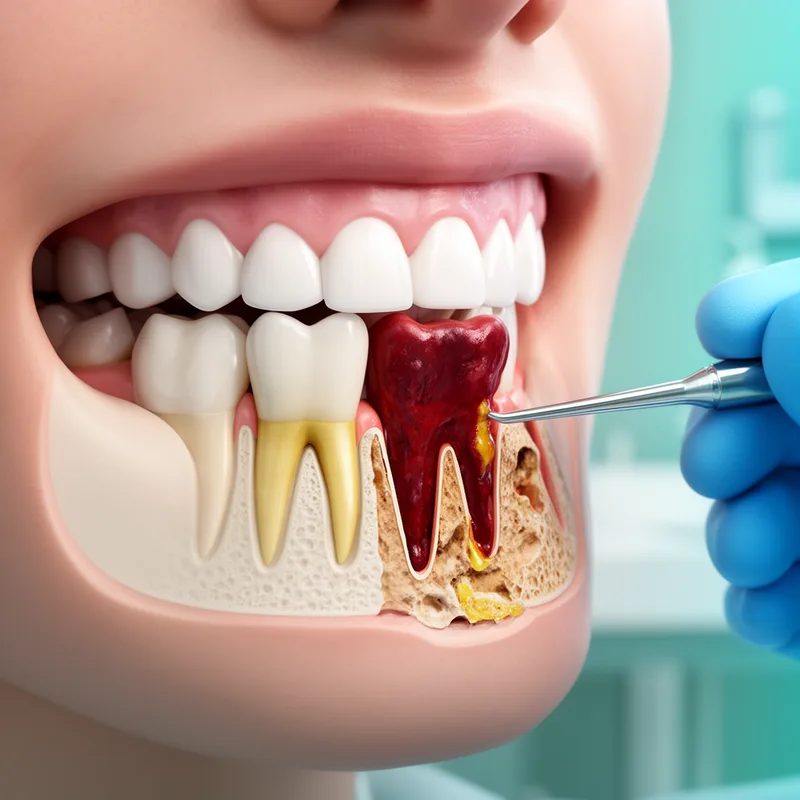
- Some people with gingivitis and periodontitis will also experience receding gums, loose or shifting teeth, and the formation of deep pockets between the teeth and gums.
Examples
-
The gum disease, or periodontitis, is caused by toxins secreted by bacteria in plaque that builds up over time around the gum line.
Blog text (22) -
Wisdom teeth are normally removed from ages 17 to 27 if they are causing problems (pain, periodontitis) or are likely to do so based on their position.
Blog text (16) -
Prevent periodontitis to reduce the risk of head and neck cancer.
Blog text (12) -
A score of 1 was normal; a 4 represented advanced periodontitis.
Academic text (1990) -
Some of the complications of having severe plaque include gum diseases like gingivitis and periodontitis.
Blog text (15) -
Chronic periodontitis, a form of gum disease, is an independent risk factor for head and neck squamous cell carcinoma.
Blog text (12) -
The 2015 Global Burden of Disease Study estimated that oral diseases and conditions (untreated caries, severe periodontitis, and edentulism) affect 3.5 billion people worldwide.
Academic text (2018) -
If untreated, the disease can worsen into periodontitis and can lead to bone loss.
-
By age 60, 25% of people have advanced infections called periodontitis.
-
If left unchecked, gingivitis can deteriorate into periodontitis, the greatest cause of tooth loss in adults.
Synonyms
 1
4.0
1
4.0
An infection of the gums and bone around the teeth that can cause tooth loss if not treated


 1
9.9
1
9.9
A serious gum disease that makes pus come from the gums and can loosen teeth

A long-lasting gum disease that makes teeth loose and may cause tooth loss
How Severe
- Specialized
1
8.4

- Specialized
5
5.8
Surface Forms
Morphology
periodontitis = peri + odont + itis
The elements 'peri-', 'odont-' and '-itis' are technical Greek combining forms used in medical terminology and are not familiar to an average B1 learner, so the meaning is not directly derivable from common English base words.
Etymology
Periodontitis comes from Greek parts: peri- 'around', odont- 'tooth' (as in orthodontist), and -itis 'inflammation' (as in tonsillitis). So, periodontitis means 'inflammation around the tooth', which explains why it is a serious gum disease that can destroy the bone around the teeth.