
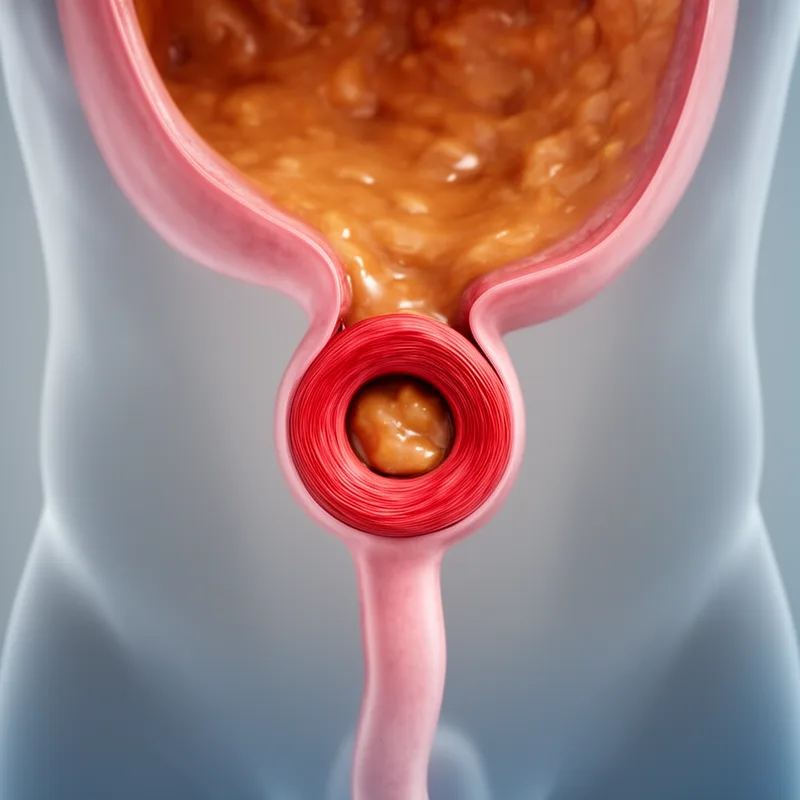
pyloric sphincter
- noun
- /paɪˈlɔrɪk ˈsfɪŋktər/
- Specialized
- The pyloric sphincter regulates the release of partially digested food from the stomach into the small intestine.
Examples
-
The pyloric sphincter controls the flow of food from the stomach into the duodenum.
-
During the operation, the surgeon examined the patient's pyloric sphincter to ensure it was functioning properly.
-
A malfunctioning pyloric sphincter can lead to digestive disorders such as pyloric stenosis.
-
The pyloric sphincter regulates food flow into the intestine.
-
A healthy pyloric sphincter is essential for digestion.
-
During the procedure, the doctor checked the pyloric sphincter to ensure it was functioning correctly.
-
An issue with the pyloric sphincter can disrupt normal digestion and lead to other health problems.
Synonyms

A ring of muscle at the lower end of the stomach that lets food pass into the small intestine

A ring of muscle at the end of the stomach that controls food entering the small intestine
Surface Forms
Morphology
The phrase is directly compositional: 'pyloric' specifies the pylorus location and 'sphincter' denotes a ring-like muscle that controls an opening, so a learner who knows both constituents can infer it is the muscle at the pylorus that regulates passage. Although medical/technical, the adjective+noun structure follows normal composition and is cross-linguistically transparent, making the meaning predictable from the parts.
Etymology
Pyloric sphincter comes from words that mean a small 'gate' and a ring that 'squeezes': pyloric points to the gate at the stomach exit and sphincter is the ring muscle that tightens. Think of it as a little gatekeeper muscle that opens to let food into the small intestine and closes to keep food in, so it means the ring of muscle that controls food leaving the stomach.

