
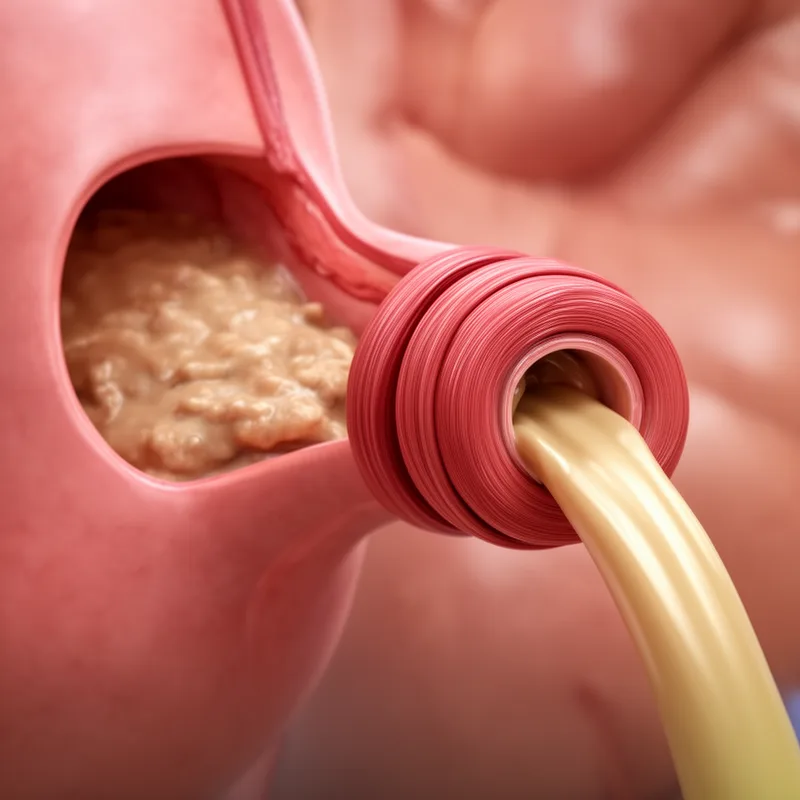
musculus sphincter pylori
- noun
- /ˈmʌskjələs ˈsfɪŋktər paɪˈlɔːraɪ/
- Specialized
- The musculus sphincter pylori regulates the flow of partially digested food from the stomach to the duodenum.
Examples
-
Surgeons often examine the musculus sphincter pylori during gastric procedures.
-
In cases of pyloric stenosis, the musculus sphincter pylori becomes abnormally thickened.
-
Proper function of the musculus sphincter pylori is essential for healthy digestion and nutrient absorption.
-
The musculus sphincter pylori regulates the flow of food from the stomach.
-
Proper function of the musculus sphincter pylori is essential for healthy digestion and nutrient absorption.
-
The musculus sphincter pylori regulates the flow of partially digested food from the stomach to the duodenum.
-
In cases of pyloric stenosis, the musculus sphincter pylori becomes abnormally thickened.
Synonyms

A ring of muscle at the end of the stomach that controls food entering the small intestine

A ring of muscle at the lower end of the stomach that lets food pass into the small intestine
Surface Forms
Morphology
musculus + sphincter + pylorus
The term is directly compositional: 'musculus' (muscle) + 'sphincter' (a closing/regulating muscle) + 'pylori' (of the pylorus) yields 'the sphincter muscle at the pylorus' which controls passage from stomach to duodenum. Although technical and Latinized in form, this anatomical naming pattern is regular and cross-linguistically common, so a learner who knows the constituent meanings can infer the MWE meaning.
Etymology
Musculus sphincter pylori comes from old Latin and Greek words: musculus means 'little mouse' and was used for 'muscle', sphincter means 'to tighten', and pylori means 'gate'. So the name gives the image of a small ring that tightens like a gate, which is why it refers to the ring muscle that controls food leaving the stomach into the small intestine.

