
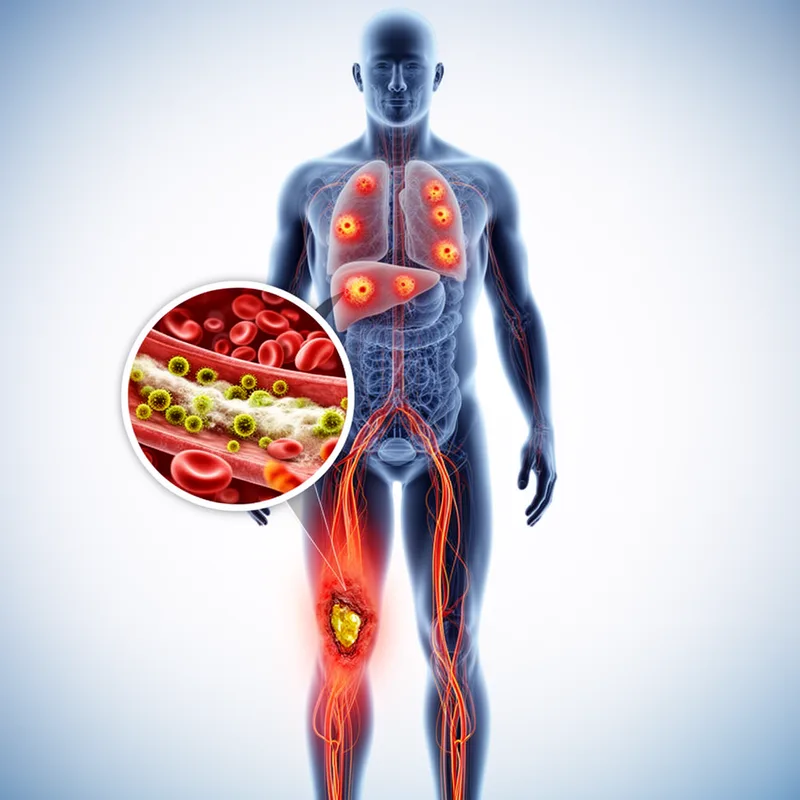
pyemia


 1
9.9
1
9.9
- noun
- /paɪˈiːmiə/
- Archaic
- If left untreated, an abscess can result in pyemia, leading to severe health complications.
Examples
-
In the nineteenth century, pyemia was a common and often fatal postoperative complication.
-
He has pyemia.
-
If left untreated, pyemia can result in abscesses forming in other organs.
-
The patient was diagnosed with pyemia after bacteria from the abscess entered his bloodstream.
-
The patient was diagnosed with pyemia after showing symptoms of infection.
-
The doctor explained that pyemia occurs when pus-forming bacteria enter the bloodstream.
-
To prevent pyemia, it is essential to manage infections and abscesses effectively.
Synonyms
 14
7.0
14
7.0
A serious infection in the blood that can make the whole body ill
 3
8.8
3
8.8
A serious infection when harmful germs enter the blood and spread through the body
How Severe

Surface Forms
Morphology
pyemia = pus (opaque) = pyo + emia
The formation uses technical combining forms ('pyo-' and '-emia') rather than productive everyday morphemes, so learners cannot reliably infer the meaning.
Etymology
Pyemia comes from the Greek root pyē 'pus' and the ending -emia 'blood condition'. So pyemia literally means 'pus in the blood', and you can remember the -emia part from the common word anemia, which also talks about the blood.