

putrescence
 1
9.9
1
9.9

- noun
- /pjuːˈtrɛsəns/
- Specialized
- They could hardly breathe because of the putrescence emanating from the swamp.
Examples
-
After days in the sun, the putrescence of the abandoned meat was unbearable.
-
In 1780, a restaurateur living near the Cimetiere des Innocents went to retrieve some bottles of wine from his cellar, whereupon the smell of putrescence overwhelmed him.
Academic text (1998) -
I'm sorry you can't deal with the fact that you will die one day and all that you are will come to putrescence and decay.
Blog text (3) -
Bow to the queen of slime, the queen of filth, the queen of putrescence!
-
The putrescence of decay.
-
The putrescence, like some omnipresent devil, hovered everywhere.
Fiction book (1996) -
Returning alone, Samuel can still smell the bucket's putrescence, or maybe the days-old bad perfume of the poison that killed the cricket in the vent.
Blog text (3) -
"A sleek furred carcass lay low in the water, swollen grotesquely with putrescence and coated with glistening blowflies.
Fiction book (1990) -
The smell of putrescence filled the room as the old food decomposed.
Synonyms
 10
5.6
10
5.6
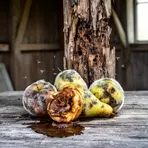
The process of plant or animal matter breaking down and rotting
 3
4.6
3
4.6
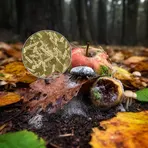
A state when food or wood goes bad
 3
3.4
3
3.4
The breaking down of dead plants and animals by bacteria or fungi
 3
8.9
3
8.9
The rotting of dead plants or animals that makes a bad smell


 1
8.2
1
8.2
A strong bad smell from rotting things
 1
9.9
1
9.9
Rotten smell and decay of dead animals or plants
Antonyms


How Decomposed

Surface Forms
Morphology
putrescence = putrescent (transparent) = putresce + ence
The noun 'putrescence' is clearly derived from the adjective 'putrescent' by adding the suffix '-ence', indicating a state or process.
Etymology
The word putrescence comes from the Latin word putrescere, which means 'to rot', and it is the same root as the familiar word putrid. So putrescence names the process or state of rotting, especially when there is a strong bad smell.