
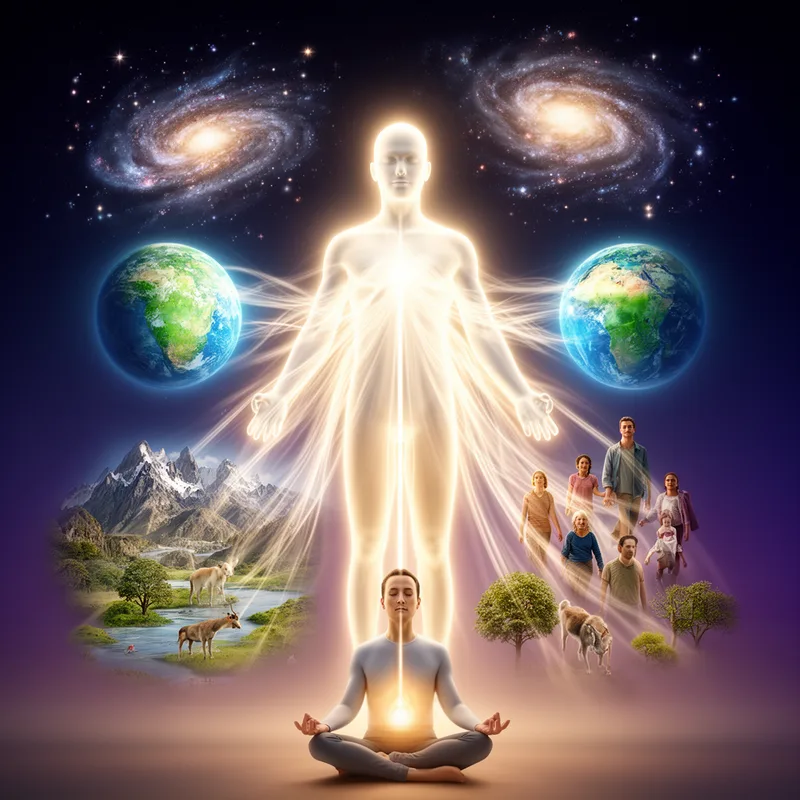
purusha
- noun
- /pʊˈruːʃə/
- Indian
- Sankhya teaches that everything that exists is made up of Purusha, the substance or soul, and Prakrti, or matter, energy, or creative force.
Examples
-
In a more familiar account, Purusha is a single primordial being who is cut up to create the universe (O'Flaherty 1975, 27-8, 34-5).
Academic text (2016) -
Nature, both animate and inanimate, is thus an expression of Shakti, the feminine and creative principle of the cosmos; in conjunction with the masculine principle (Purusha), Prakriti creates the world.
Blog text (34) -
The Purusha is by nature free, but it is held captive in the body, or so at least it appears; hence suffering.
Academic text (2018) -
For example, Samkhya and Yoga maintain that the self is ultimately identical to eternal, changeless Purusha.
Academic text (1990) -
Even though this can be seen as a good, it chains the Purusha to such things as wisdom or happiness, thus seemingly depriving it of freedom.
Academic text (2018) -
By the same token, the Hindu primordial being Purusha is androgynous, according to one account: "he was the same size and kind as a man and woman closely embracing."
Academic text (2016) -
Freedom is attained when the Purusha is liberated from the bonds of the Guna trailing about it like a rope or chaining it.
Academic text (2018) -
Yoga aims to dissolve the rigid boundary between erroneous human self-perception and understanding the truth about the human condition; it shows the way to salvation from the confusion rampant in the world between the object (Prakrti) and the subject (Purusha).
Academic text (2018) -
In Hindu philosophy, the Purusha is considered the universal spirit that underlies all existence.
-
According to the ancient texts, the Purusha represents the cosmic self that connects all living beings.
Synonyms
 3
9.9
3
9.9

The ultimate spirit that is the source of everything in Hinduism

A single inner spirit that connects all living things
Surface Forms
Etymology
Purusha in Hindu thought kept the basic sense of 'person' but came to mean the great 'universal self' or spirit behind the world. Think of purusha as the 'cosmic person' inside everything, which is why it names the eternal spirit in many texts.