
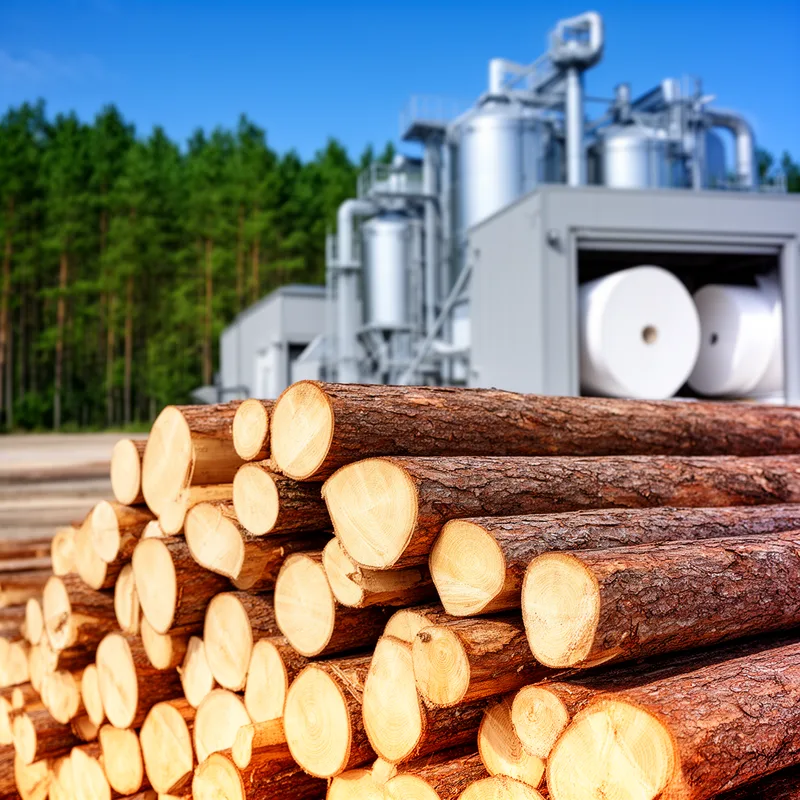
pulpwood
 1
7.4
1
7.4

- noun
- /ˈpʌlpˌwʊd/
- Specialized
- Pulpwood accounts for more than a quarter of industrial wood consumption.
- pulpwood plantation
Examples
-
The proportions of pulpwood, chip-and-saw timber, and sawtimber to the total yield were also determined.
Academic text (2017) -
In the 1920s, it was converted to a barge and started hauling pulpwood out of Port Arthur, Ontario, now part of Thunder Bay.
Blog text (26) -
The rest of it might go a little bit for pulpwood.
-
Industry in the interior consists mostly of plants that process agricultural products such as sugarcane, pulpwood, and wine grapes.
Academic text (2000) -
The POWs harvested cotton, tomato, and peanut crops, and they worked in numerous industries, including pulpwood and lumber.
Academic text (2008) -
Per capita, U.S. residents consume 33 times more aluminum, 183 times more natural gas, and 385 times more pulpwood than Indians.
Academic text (1995) -
Thirty-three potential pulpwood plantation concessions of 300,000 hectares each (a total area larger than Portugal) had been identified by 1993.
Academic text (1999) -
The remainder mostly consists of pulpwood trees, largely plantation-grown softwoods planted in orderly rows and mechanically harvested as a 20-year rotation crop.
Academic text (1992) -
The company specializes in harvesting pulpwood for the paper industry.
-
Due to rising demand, the price of pulpwood has increased significantly this year.
Synonyms
 613
1.0
613
1.0
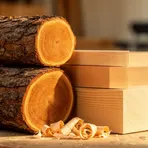
The hard material from trees used for building and as fuel
 3
3.7
3
3.7
Wood from trees like pine and fir that is softer and easy to cut
How Processed

Surface Forms
Morphology
Etymology
The word pulpwood is made from pulp and wood. The pulp part means 'soft, wet mass' like the inside of a fruit, so pulpwood is simply wood used to make that soft material for paper.