
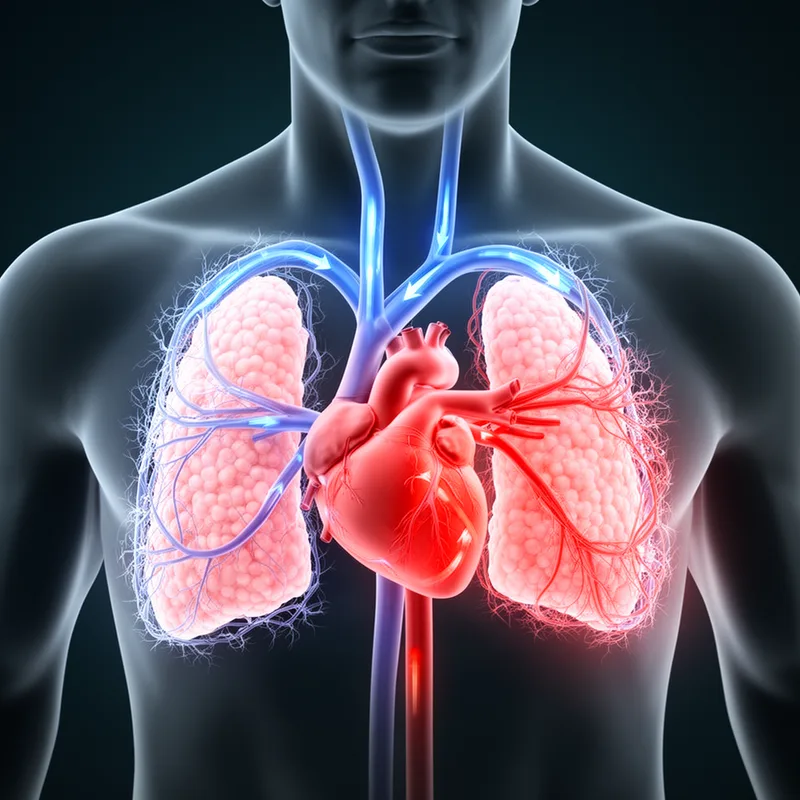
pulmonary circulation
- noun
- /ˈpʌlməˌnɛri ˌsɜrkjʊˈleɪʃən/
- Specialized
- The pulmonary circulation carries deoxygenated blood from the heart to the lungs for oxygenation.
Examples
-
The pulmonary circulation is vital for oxygenating blood.
-
Medical students study the pulmonary circulation to understand how the body exchanges gases.
-
Damage to the pulmonary circulation can result in serious respiratory problems.
-
In the pulmonary circulation, blood travels to the lungs.
-
The pulmonary circulation is essential for oxygenating blood in the lungs.
-
When the heart pumps, the pulmonary circulation allows blood to flow to the lungs for oxygen.
-
In patients with respiratory issues, the effectiveness of the pulmonary circulation can be affected.
Surface Forms
Morphology
The phrase combines 'pulmonary' (relating to the lungs) and 'circulation' (movement of blood), so the meaning — blood flow between the heart and lungs for oxygenation — is directly derivable from the parts. This is a regular technical compound with clear cross-linguistic cognates and transparent composition, so a learner who knows the constituent words will understand it.
Etymology
Pulmonary circulation shows a simple picture: pulmonary means 'lung' and circulation means a 'round trip'. Blood makes a short round trip from the heart to the lungs to pick up oxygen and back to the heart, so the phrase means 'the path of blood between the heart and lungs'.

