
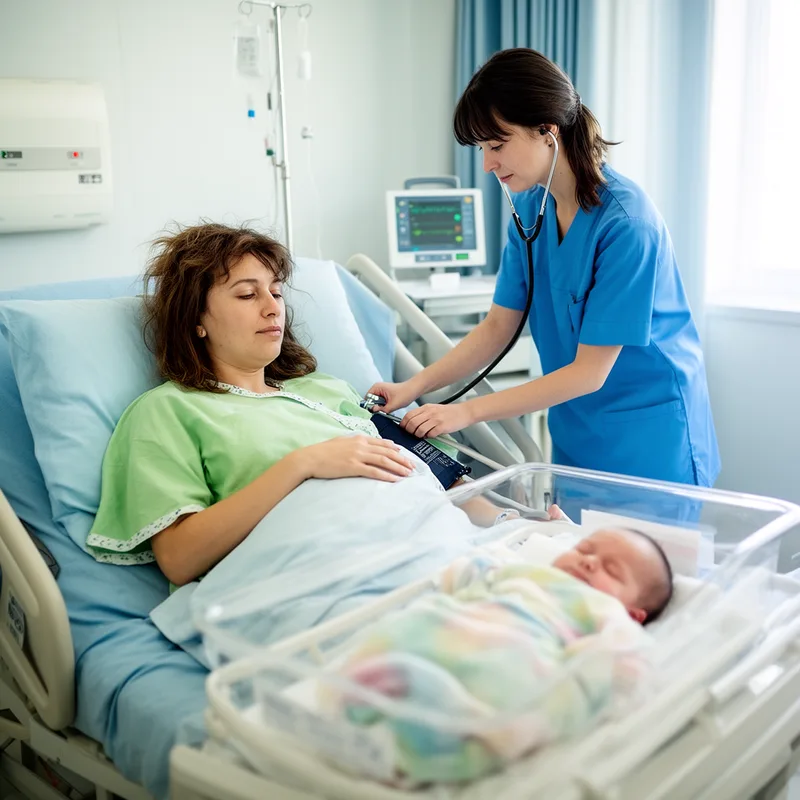
puerperium


 1
9.9
- noun
- /ˌpjʊərˈpɪəriəm/
- Specialized
- Healthcare professionals monitor the health of women during the puerperium to ensure a smooth recovery after delivery.
Examples
-
During the puerperium, new mothers often experience significant physical and emotional changes as their bodies recover from childbirth.
-
For the present analysis, we selected only premenopausal women, aged 15-49 (mean age: 34.9), who were at the time of their thrombosis (or similar date for a control) not pregnant, nor in the puerperium, had not had a recent miscarriage, and had not used injectable progestagens.
Academic text (1995) -
The puerperium can last up to six weeks as the mother's body undergoes various adjustments following pregnancy.
How Long
- Specialized
1
9.9

- Specialized
27
5.0
Surface Forms
Etymology
Puerperium comes from Latin parts puer 'child' and parere 'to give birth'. So, it literally means the time after giving birth and is used for the period when a mother's body returns to normal while she recovers from childbirth.