

pteroylglutamic acid
- noun
- /ˌtɛroʊɪlɡluˈtæmɪk ˈæsɪd/
- Specialized
- Many prenatal vitamins contain pteroylglutamic acid to support healthy fetal development.
Examples
-
A deficiency in pteroylglutamic acid can lead to certain types of anemia.
-
Eating leafy greens provides pteroylglutamic acid for your health.
-
Researchers studied the effects of pteroylglutamic acid supplementation on rapid cell division.
-
Many cereals are fortified with pteroylglutamic acid.
-
A deficiency in pteroylglutamic acid can lead to certain types of anemia.
-
Many prenatal vitamins contain pteroylglutamic acid to support healthy fetal development.
-
Eating leafy greens provides pteroylglutamic acid for your health.
Synonyms

 7
3.0
7
3.0

A B vitamin that helps the body make new cells and prevents birth defects in early pregnancy
 5
3.6
5
3.6
A B vitamin that helps the body make new cells and is in leafy greens


 1
6.8
1
6.8
A B vitamin that helps the body make new cells and blood
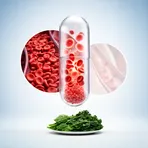
A vitamin needed for making new cells and preventing anemia

A substance your body needs to make new cells, especially during pregnancy

A B vitamin, also called folic acid, needed for cells to grow and make new cells
Surface Forms
Morphology
pteroylglutamic + acid
Although the headword contains 'acid', which signals a chemical substance, the segment 'pteroylglutamic' is a highly technical, non-transparent chemical name whose internal morphemes are not interpretable by a B1 learner. The specific meaning 'a B vitamin (folic acid)' cannot be derived from ordinary knowledge of the constituents; this term is domain-specific and requires specialist knowledge, so it is opaque to general learners.
Etymology
Pteroylglutamic acid may come from joining pteroyl, a part named from a word meaning 'wing' because a small part of the molecule looked wing-like to the scientists, and glutamic acid, a common substance in the body. So the name points to the two parts of the vitamin and helps remember that pteroylglutamic acid is the same as 'folic acid', a vitamin needed for cell growth and reproduction.