
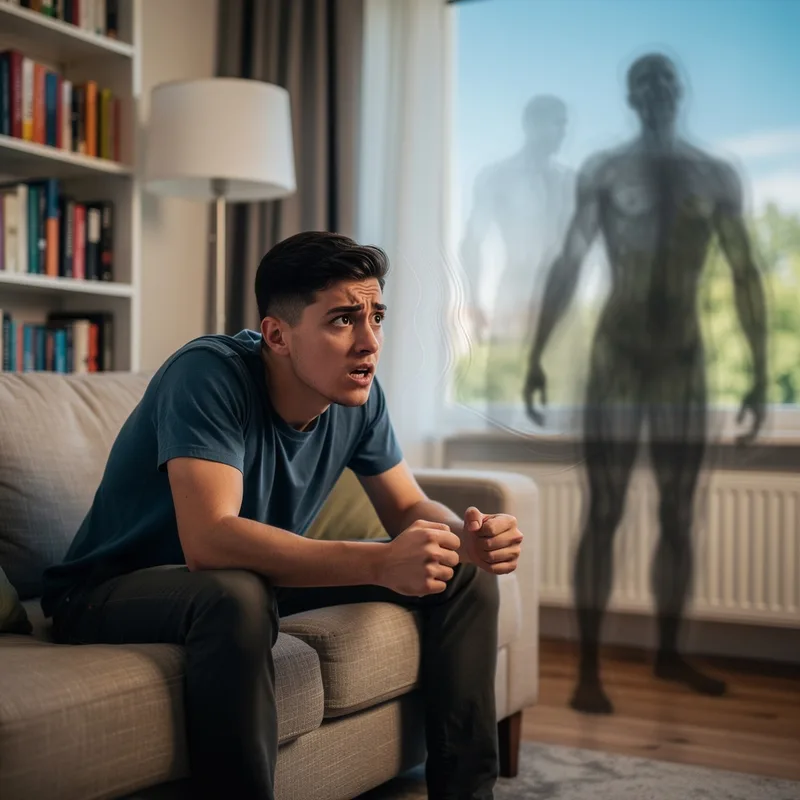
psychosis
 52
8.7
52
8.7

- noun
- /saɪˈkoʊsɪs/
- Specialized
- Doctors diagnosed him with psychosis after he exhibited signs of losing touch with reality.
- people with psychosis
- hallucinations and psychosis
- postpartum psychosis
Loading YouTube…
Watch on YouTubeAnd I'm up there in my own world of psychosis thinking I'm doing the right thing.
- And I'm up there in my own world of psychosis thinking I'm doing the right thing.
- That's when the the most profound psychosis with all of the hallucinating would be going on.
- And in his psychosis, he felt that somebody was pumping air from the room.
- And the doctors were all saying, people are coming in, you know, having LSD induced psychosis.
- And by day five, they were bordering on having, you know, aspects of quite severe psychosis.
- And tobacco doesn't cause psychosis or or violent behavior.
- And that some of those cases are ones in which the psychosis is irreversible, correct.
- It also is just like it's got to be psychosis inducing at some point.
- So from Botswana and the incidence of psychosis went up.
- He said you want you want adventures and psycho psychosis, go collect rent.
- So we've got a case of a crush induced psychosis.
- She had, she had chronic, chronic depression and psychosis.
- And they said, you know, this, this feels much better than psychosis.
- Or, or it could be some sort of psychosis.
- It's a long term mental health illness associated with psychosis.
Examples
-
During his episode of psychosis, he believed that he could hear voices talking to him.
-
But for other people, it can result in psychosis, it can result in OCD symptoms, it can result in all sorts of things.
-
And in his psychosis, he felt that somebody was pumping air from the room.
-
But what experience do most practice nurses have with regard to managing patients with psychosis?
Academic text (2015) -
My mother's response to this psychosis was to summon me home.
Fiction book (1997) -
Emily Rose had epilepsy, which caused psychosis.
-
Doctor Talbot, it is my opinion that something else, something unique and terrifying is responsible for this patient's psychosis!
-
The serum could have long-lasting side effects on him mentally and could possibly lead to psychosis.
-
I found myself really drawn towards psychosis, people who had hallucinations and delusions and just didn't think the way the rest of us do.
-
She was hospitalized after experiencing severe psychosis characterized by intense hallucinations.
Synonyms
 231
6.5
231
6.5
A serious mental illness that makes a person unable to think or behave normally

Condition where a person sees or hears things that are not real and has false beliefs
Antonyms

Compounds

- Specialized

 1
9.9
1
9.9
A serious mental illness where a person loses touch with reality and talks or thinks in a confused way

- Specialized
Long-lasting memory problem with severe short-term memory loss caused by long-term heavy drinking

- Specialized
A long-lasting memory disorder after heavy drinking that makes people forget recent events but remember older ones

- Archaic
A mental illness with times of very high energy and times of very low mood

- Archaic
A serious memory problem where heavy long-term drinkers lose recent memories but keep old ones

- Archaic
Severe memory loss and confusion in very old people caused by brain damage
How Disturbed
231
6.5

- Specialized
52
8.7
- Specialized
19
8.5
- Formal
18
6.7
389
1.8
Surface Forms
Morphology
Etymology
Psychosis comes from Greek parts: psyche meaning 'mind' and the ending -osis meaning 'condition' or 'disease', the same root as in psychology. So psychosis is a 'condition of the mind', which explains why it describes a serious loss of touch with reality.