
propene


 1
9.3
1
9.3
- noun
- /ˈproʊpiːn/
- Specialized
- The chemical formula for propene is C3H6.
Examples
-
Many plastics are made from propene derivatives.
-
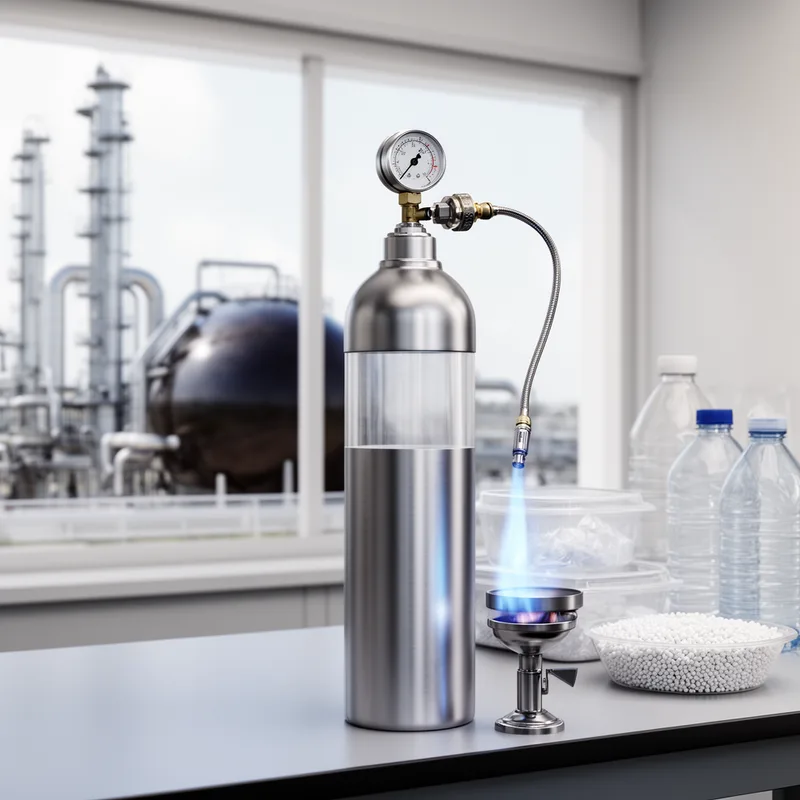
In the lab, propene is stored in specialized pressurized cylinders to ensure safety.
-
The production of polypropylene plastics relies heavily on propene as a key ingredient.
-
Manufacturers can obtain propene through the process of cracking petroleum for chemical applications.
-
Propene is often used in the production of propene plastic and synthetic rubber.
-
During the chemical reaction, they observed the formation of propene gas.
-
Researchers conducted experiments to analyze the properties of propene.
Synonyms
 2
8.1
2
8.1
A gas from oil that burns easily and is used to make plastics
Surface Forms
Morphology
propene = propane (opaque) = prop + ene
The formation uses specialized chemical combining forms (prop- + -ene) whose meaning (an alkene with three carbons) requires domain-specific nomenclature knowledge.
Etymology
Propene comes from two parts: prop- (used in chemistry for 'three carbon atoms', as in propane) and -ene (the ending that means 'double bond', as in ethylene). So, propene is a small three-carbon gas with a double bond, which is why it is a flammable building block for many plastics.