

prolixity


 1
9.9
1
9.9
- noun
- /prəˈlɪksɪti/
- Formal
- John's decreased prolixity?
Examples
-
The topic of the sonnet, after the vivid opening vehicle, trails off into vagueness and prolixity.
Academic text (2005) -
McCloskey: Prolixity, I am told.
Academic text (2016) -
Although it suffers from prolixity, it has its eloquent moments.
Academic text (1999) -
They have customs, methods, and ways of squeezing money out of the people, which I shall not enumerate in order to avoid prolixity.
Academic text (2003) -
However, such obscurity and prolixity lead us to consider the possibility that Brown, while spending eleven years to contemplate and expound upon these allusions as he executed work, may have lost sight of his viewing audience in favor of narrative gamesmanship.
Academic text (1992) -
During the meeting, his prolixity made it hard for others to stay engaged with the discussion.
-
She appreciated concise writing, but her friend was known for his prolixity in emails.
-
The lecturer's prolixity caused many students to lose interest in the lecture.
Synonyms
 33
5.5
33
5.5
Long confused speech or writing that is hard to follow
 11
8.1
11
8.1
Language that uses too many words and is hard to understand
 8
5.2
8
5.2
Unnecessary repetition that makes speech or writing longer
 1
7.3
1
7.3
Using more words than needed when speaking or writing
 1
4.8
1
4.8
Using more language than needed in writing or speech
 1
7.5
1
7.5
Talking or writing with too many words makes people bored
 1
7.0
1
7.0
The number of words used in writing or speech, often too many
 1
9.9
1
9.9
The habit of talking a lot

The use of too many words that makes speech or writing long and boring

Using more words than needed so speech or writing is hard to follow

Speech or writing that uses too many words

An excess of words that do not add meaning

Speaking or writing with more words than needed and making the meaning unclear

A habit of saying the same words or ideas too often so people get bored

A phrase that uses more words than needed

Using more words than needed to say something in a roundabout way

Lack of focus in speech or writing that makes ideas hard to follow

A long boring piece of writing or speech that repeats the same points
Antonyms
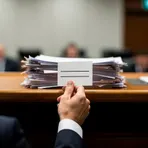

How Wordy
- Formal
1
9.9
 14
5.3
14
5.3
Surface Forms
Morphology
Etymology
Prolixity comes from Latin parts pro- 'forward' and laxus 'loose', so it originally gave the image of something 'stretched out'. That's why prolixity means using too many words, speech or writing that is too long and loose and can be boring.