

principle of superposition
- noun
- /ˈprɪnsəpəl əv ˌsuːpərpəˈzɪʃən/
- Specialized
- Can you explain the principle of superposition in more detail?
Examples
-
The principle of superposition explains how wave patterns interfere constructively and destructively.
-
Students learned to apply the principle of superposition to solve complex wave problems in physics.
-
In quantum mechanics, the principle of superposition underlies the concept of a particle being in multiple states at once.
-
The principle of superposition is fundamental in wave theory.
-
The scientist explained that the principle of superposition allows us to predict the outcome of overlapping waves.
-
According to the principle of superposition, the total displacement of a wave at any point is the sum of its individual displacements.
-
In physics, the principle of superposition is crucial for understanding how different wave patterns interact with each other.
Synonyms
 4
8.6
4
8.6

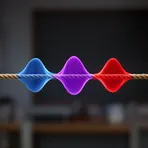
A case where different waves or forces act together and produce one result
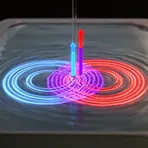
Movement at any point is the sum of the movements caused by each wave
Surface Forms
Morphology
principle + of + superposition
The structure 'principle of X' is directly compositional: it denotes a rule or law concerning X, so a learner who knows 'principle' and 'superposition' can infer that this is the governing rule about superposition. Although 'superposition' is a technical term whose specific scientific senses may be specialized, the overall meaning of the noun phrase is transparently derived from its constituents and parallels equivalent constructions in other languages.
Etymology
Principle of superposition comes from the image of waves on water meeting each other: when two waves arrive at the same place the water moves as both waves together, so their effects 'add up' or can cancel. So in physics it means the result is the 'sum' of the individual waves or effects.