
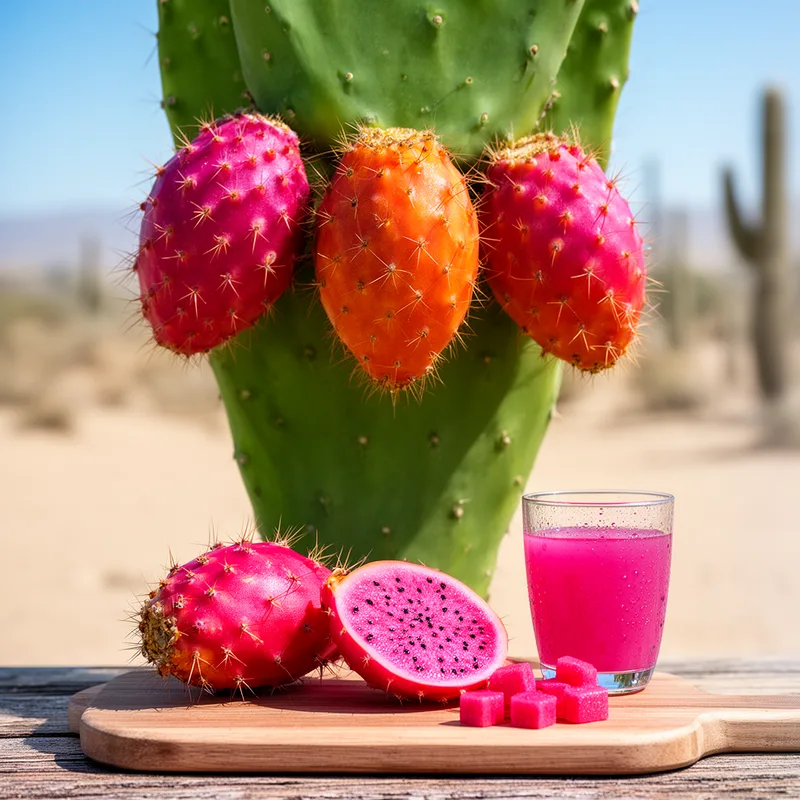
prickly pear
 1
4.1
1
4.1

- noun
- /ˈprɪkli pɛr/
- Ipa would give him corn cakes smeared with the red jam of prickly pear fruit, or beans and wild onions, or whatever special treat she could find.
- prickly pear species
Examples
-
Three summers of gathering juicy, red, prickly pear tunas, and eating until their stomachs ached with fullness.
Fiction book (1995) -
She made a delicious jam from ripe prickly pears harvested from her garden.
-
There are basically prickly pears or tunas.
-
Fresh meat would be a treat, but I would have eaten raw prickly pear if it got us closer to the Sheyenna Agency.
Fiction book (1995) -
I picked prickly pear fruit and tasted it, then we drove on, maybe to Yarnell.
Academic text (2015) -
Harvesting of the prickly pears was a time of great joy and merriment, especially for those eligible for marriage.
Fiction book (1995) -
The chef prepared a refreshing salad using diced prickly pear and lime.
-
In many regions, drinks made with prickly pear juice are popular during the summer.
Synonyms
 1
9.9
1
9.9
A tropical cactus that makes a sweet edible fruit
How Spiny


Surface Forms
Morphology
prickly + pear
The meaning is directly derivable from combining 'prickly' (spiny, thorny) with 'pear' (a fruit or pear-shaped object): a spiny, pear-shaped fruit. This compound follows regular English noun-composition patterns and would be understandable to a B1 learner who knows the two constituent words, even if they have not seen the specific botanical referent before.
Etymology
The fruit called prickly pear gets its name from being covered in tiny sharp prickles and from looking like a small pear. That's why today the word often means the spiny, pear-shaped 'fruit' you can eat.