

preemption
 3
8.8
3
8.8

- noun
- /priˈɛmptʃən/
- Formal
- The law establishes federal preemption to ensure consistency across different states on environmental regulations.
- federal preemption
- state preemption
- preemption of state law
Examples
-
For these reasons, it was not possible to include preemption in our formal analyses.
Academic text (2013) -
In addition, state preemption may cover different types of local authorities and therefore may not be comparable between states.
Academic text (2013) -
And finally oppose federal preemption of state and local local controls.
-
Section II of this Comment explains the Supreme Court's interpretation of preemption doctrine.
Academic text (1992) -
The Welch case, discussed earlier, was the first case to address the issue of federal preemption.
Academic text (1999) -
Similarly, various groups and officials have been lobbying members of Congress to oppose preemption legislation.
Academic text (1992) -
We did not consider state preemption of local governments' authority to enact smoking restriction laws in this analysis.
Academic text (2013) -
Absent an explicit preemption clause, courts must examine signs of implicit congressional preemption.
Academic text (1991) -
Federal preemption means that if a federal law and a state law conflict, the federal law will prevail.
-
Many court cases hinge on the principle of preemption, particularly when state laws challenge federal authority.
Synonyms
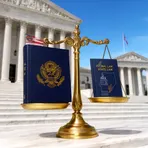
A rule that federal law is more important than state law on the same subject
Surface Forms
Morphology
Etymology
Preemption comes from pre- meaning 'before' and empt (from the Latin emere) meaning 'to buy', so imagine federal law 'buying' the whole subject before states can act; that's why preemption in law means federal rules take priority over state rules.