

prairie wake-robin
- noun
- /ˈprɛəri ˈweɪkˌrɒbɪn/
- Specialized
- In the spring, the prairie wake-robin displays its beautiful dark purple flowers, attracting many pollinators.
Examples
-
The prairie wake-robin blooms early in the spring among the tall grasses of the Midwest.
-
Botanists were excited to discover a rare prairie wake-robin during their field study.
-
Because of habitat loss, the prairie wake-robin has become less common in some areas.
-
The prairie wake-robin blooms in early spring.
-
I saw a prairie wake-robin near the riverbank.
-
During their nature walk, the children were thrilled to spot a prairie wake-robin hidden among the wildflowers.
-
The prairie wake-robin thrives in moist, wooded areas where its unique flowers can flourish.
Synonyms
 1
9.1
1
9.1

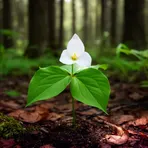
A small wild plant with three leaves and one flower with three petals that grows in forests
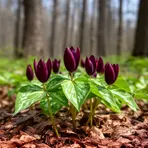
A North American wildflower from central United States with dark purple, stemless flowers
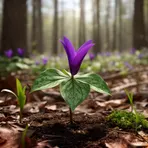
A woodland plant with deep purple flowers and no stalk that grows in the central United States

A woodland plant with three leaves and one three-petaled flower common in North America
Surface Forms
Morphology
prairie + wake-robin
The modifier 'prairie' transparently indicates a variety associated with grassland habitat, but the head 'wake-robin' is a lexicalized plant name (historically referring to a trillium) and is not directly interpretable from its apparent parts. Because understanding the full meaning depends on prior lexical knowledge of 'wake-robin' rather than predictable composition, the phrase is only partially transparent to a B1 learner.
Etymology
Prairie wake-robin comes from the word prairie, which shows where it grows, and the old name wake-robin for early spring flowers. One popular story says the part wake means a spring 'wake-up' and robin points to the bird that returns in spring, so the name helps you remember it is a small flower that blooms early on the prairie.