

Trillium recurvatum
- noun
- Specialized
- The woodland was dotted with Trillium recurvatum, their deep purple petals standing out among the greenery.
Examples
-
Gardeners admire Trillium recurvatum for its unusual, sessile flowers and attractive foliage.
-
Botanists conducted a study on the habitat preferences of Trillium recurvatum in central Illinois.
-
Look at that stunning Trillium recurvatum blooming!
-
I saw a beautiful Trillium recurvatum in the garden.
-
In spring, we often spot Trillium recurvatum blooming in the wooded areas of central Illinois.
-
The vibrant flowers of Trillium recurvatum create a stunning contrast against the forest floor.
-
During a nature walk, we identified Trillium recurvatum by its distinctive dark purple flowers.
Synonyms

A wildflower with dark purple flowers without stems that grows in central United States prairies
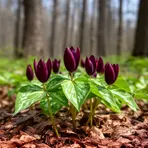
A North American wildflower from central United States with dark purple, stemless flowers
Surface Forms
Morphology
trillium + recurvatum
This is a Latin binomial (genus + species): 'trillium' signals a plant but the species epithet 'recurvatum' is an obscure Latin form not known to a B1 learner, so the specific meaning ('a species with dark purple, stalkless flowers') cannot be derived from the parts. Scientific names are language-neutral but not compositionally transparent to general learners, so the expression is unpredictable without prior exposure.
Etymology
Trillium recurvatum may come from Latin words that describe the plant: Trillium refers to its 'three' leaves or petals, and recurvatum means 'curved back', which gives the image of flower parts that bend backward, so the name helps you picture this dark purple, stalkless woodland flower.

