
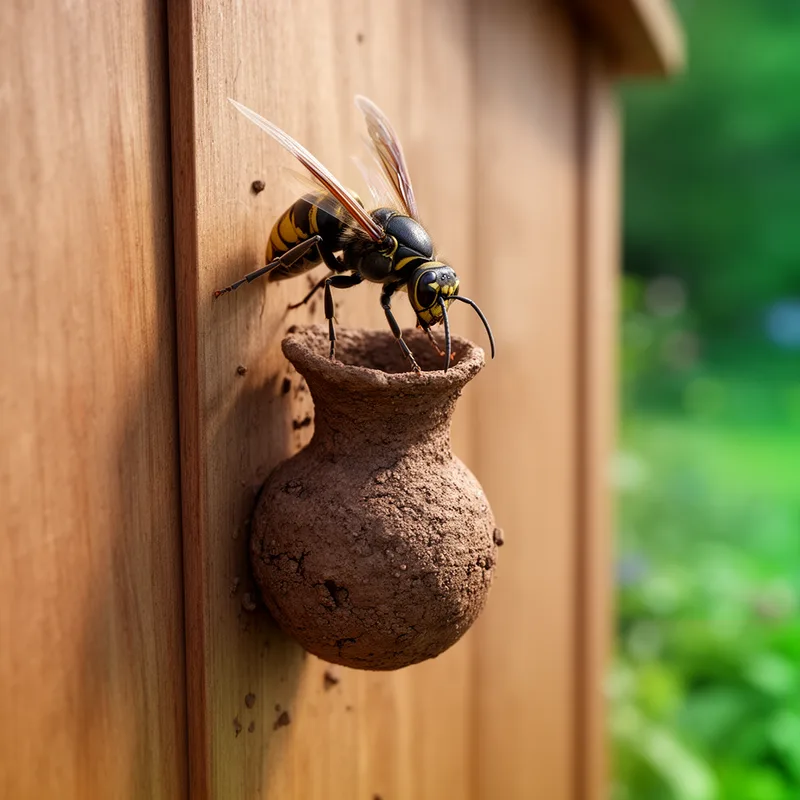
potter wasp
- noun
- I saw a potter wasp building a nest in the garden.
Examples
-
Many gardeners admire the potter wasp for helping control pest insects.
-
A potter wasp built its distinctive mud nest on the side of our shed.
-
The potter wasp carefully shaped the entrance to its vase-like nest.
-
The potter wasp is known for its unique mud nests.
-
The potter wasp carefully molded mud to create a vase-shaped nest for her eggs.
-
In the garden, we noticed a potter wasp busily working to build her nest.
-
The potter wasp collects mud from puddles to fashion its unique nest.
Synonyms

A wasp that lives alone and builds small mud nests for its young
A small wasp that builds a pot-shaped nest from mud

A wasp that makes a nest from mud and keeps spiders to feed its young

A wasp that builds small nests from mud
Surface Forms
Morphology
The compound combines 'potter' (maker of pots) with 'wasp' so a learner who knows both words can infer it refers to a wasp associated with pot‑making — i.e. one that builds pot/vase‑shaped mud nests. This is a regular, compositional noun‑noun naming pattern in English (and found similarly in other languages), so the meaning is directly derivable from the constituents.
Etymology
Potter wasp: The name potter wasp comes from the tiny mud 'pots' these wasps make; like a human potter shaping clay, the wasp builds a small vase of mud to hold its eggs. That's why the name means a wasp that makes vase-shaped mud nests for its eggs.

