

mason wasp
- noun
- /ˈmeɪsən wɑsp/
- A mason wasp collects mud to construct its nest on the wall.
Examples
-
Mason wasps are often seen around gardens during the summer.
-
The egg-laying habits of the mason wasp help control pest populations.
-
The mason wasp is known for its unique nesting behavior.
-
A mason wasp can often be found in gardens.
-
A mason wasp collects mud to construct its nest in a sunny spot.
-
You can spot a mason wasp flying around as it looks for materials to build its home.
-
The mason wasp skillfully mixes mud to create sturdy nests for its young.
Synonyms

A wasp that lives alone and builds vase-shaped mud nests for its eggs
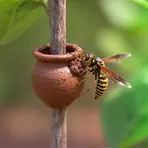
A small wasp that builds a pot-shaped nest from mud

A wasp that makes a nest from mud and keeps spiders to feed its young

A wasp that builds small nests from mud
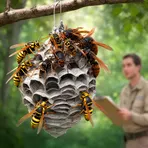
A group of wasps like hornets and yellow jackets
Surface Forms
Morphology
The compound transparently combines 'mason' (a builder) with 'wasp' (an insect), so a learner who knows both words can infer it is a wasp that builds (i.e., makes nests). This simple noun–noun composition follows regular English compounding patterns and is cross-linguistically common, making the basic meaning readily derivable for B1 learners.
Etymology
Mason wasp gets its name from how this wasp builds a nest from mud. Like a human mason who lays bricks, she packs and hardens the mud into small chambers for her young, so the name points to its 'building' habit.

