
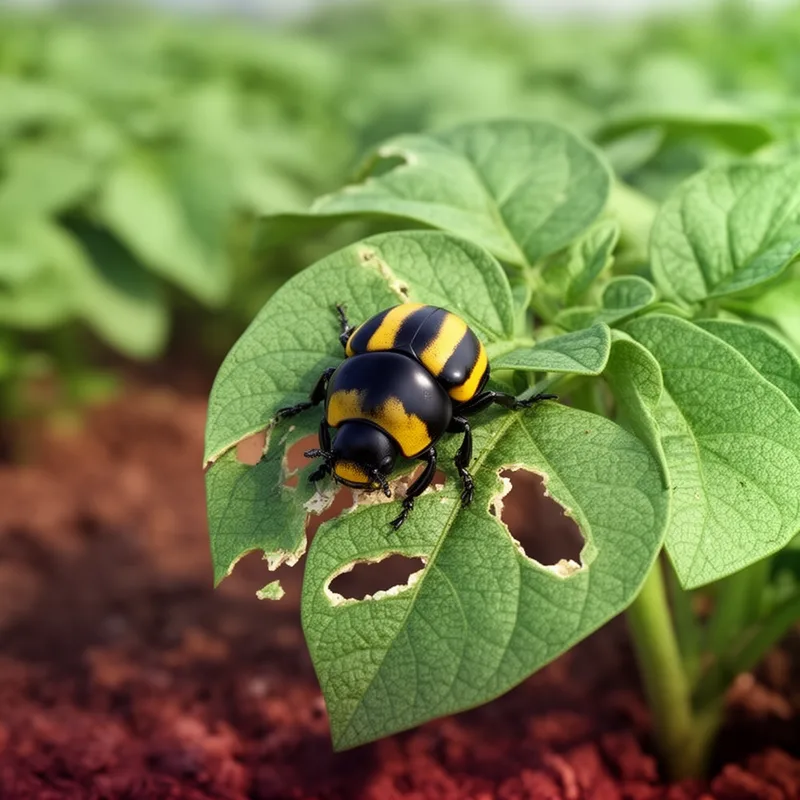
potato bug
 1
5.7
1
5.7

- noun
- /pəˈteɪtoʊ bʌɡ/
- US
- He warned his neighbors about the potato bugs that could damage their crops if left unchecked.
Examples
-
During the summer, the gardener found numerous potato bugs on the plants in her vegetable garden.
-
Oh, look, a potato bug!
-
The only other time I've had potato bugs was on some melon plants that were also very sickly.
Blog text (11) -
I had seen her crush potato bugs and snap the delicate pods of sweet peas.
Fiction book (1994) -
The subdivision in which she'd spent the first ten years of her life was bordered by fields of potatoes, and in these fields, Cara and her friends hunted potato bugs and turtles.
Fiction book (1993) -
The potato bugs gave off a repulsive, invigorating odor, but the fact that the boxed pet turtles were actually called box turtles assured Cara of the essential, sensible nature of the planet.
Fiction book (1993) -
While we were weeding, we discovered a group of potato bugs hiding under the leaves of the potato plants.
Synonyms
 1
4.8
1
4.8
A black and yellow beetle that eats potato plants
 1
7.0
1
7.0
A black-and-yellow beetle that eats potato leaves when young and as an adult

 1
7.5
1
7.5
A small insect with black and yellow stripes that eats potato leaves and harms crops
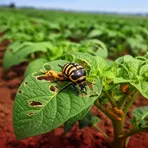
A black and yellow beetle that eats potato leaves
Surface Forms
Morphology
The noun-noun compound is compositional: a B1 learner who knows 'potato' and 'bug' will naturally interpret 'potato bug' as an insect associated with or found on potatoes (i.e., a bug that affects potato plants). Although it refers to a specific species, the relation is directly derivable from the constituents and follows common cross-linguistic compounding patterns, so the meaning is transparent.
Etymology
The noun potato bug comes from a simple picture: a small creature on a potato plant eating the leaves. Here potato shows the plant it likes and bug means 'insect', so the name tells you it is an insect that eats and damages potatoes.