
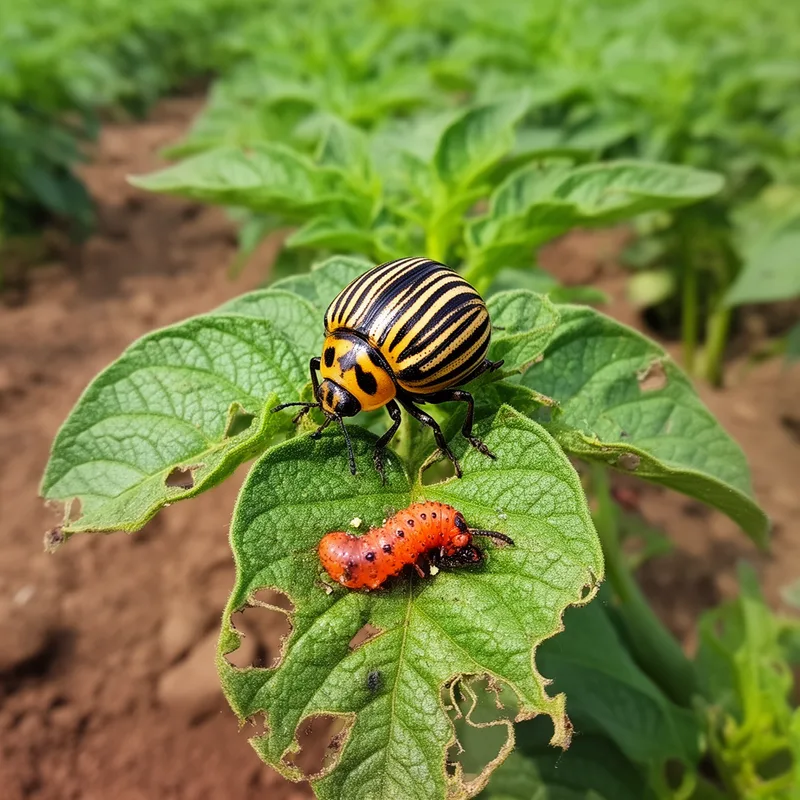
Colorado potato beetle
 1
7.0
1
7.0

- noun
- /ˈkɒləˌrædoʊ pəˈtoʊtəʊ ˈbiːtəl/
- US
- control Colorado potato beetles
Examples
-
Colorado potato beetles, which devour foliage on potatoes, tomatoes, and eggplants, resist most insecticides.
Academic text (1994) -
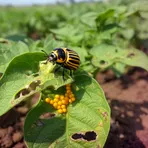
The Colorado potato beetle lays clusters of yellow eggs on the underside of the leaves of potato plants.
-
In a couple of days, a Colorado potato beetle infestation can totally defoliate potatoes.
-
As a whole, about 40% of the insecticides that were applied were for Colorado potato beetle control.
Synonyms
 1
4.8
1
4.8
A black and yellow beetle that eats potato plants
 1
5.7
1
5.7
A black and yellow beetle that eats potato leaves

 1
7.5
1
7.5
A small insect with black and yellow stripes that eats potato leaves and harms crops
A black and yellow beetle that eats potato leaves
Surface Forms
Morphology
The noun phrase is fully compositional: 'beetle' (an insect) modified by 'potato' (the host plant) and the place name 'Colorado', so its meaning — a beetle associated with potatoes (originally from Colorado) — can be directly derived from the parts. This place + noun + noun naming pattern is common in English and other languages, so a B1 learner who knows each constituent would readily infer the referent.
Etymology
Colorado potato beetle comes from a clear picture: a striped beetle found near Colorado that eats potato leaves. So the name means the 'pest' insect that eats potato plants.