

portal tomb
- noun
- UK
- Archaeologists discovered a portal tomb dating back to the Neolithic period in the Irish countryside.
Examples
-
The massive stones of the portal tomb stood untouched for thousands of years.
-
We visited an ancient portal tomb during our history field trip.
-
The ancient portal tomb stood in the middle of the field.
-
Many portal tombs can be found in Ireland.
-
Archaeologists discovered a portal tomb dating back to the Neolithic period in the Irish countryside.
-
The massive stones of the portal tomb stood untouched for thousands of years.
-
We visited an ancient portal tomb during our history field trip.
Synonyms
 235
3.0
235
3.0

A large stone building or underground room where people put a dead person
 1
9.9
1
9.9
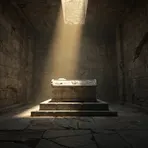
A stone structure of two tall standing stones with a third stone laid across the top


 1
9.9
1
9.9
An ancient tomb made of large upright stones that hold a flat stone

A very old stone tomb with large upright stones and a flat stone on top
How Old

Surface Forms
Morphology
The compound simply combines 'portal' (gateway/entrance) with 'tomb' (burial chamber), so a learner who knows both words can infer it is a tomb characterized by an entrance or portal. Although the full archaeological specifics (upright stones supporting a capstone) are technical, the core meaning is directly compositional and predictable from the constituents.
Etymology
Portal tomb comes from how the stones look: two tall upright stones form a stone portal like a 'door' and hold a flat stone on top above the burial tomb or 'grave'. So the name helps you picture a very old stone 'grave' made from upright stones holding a flat top stone.