
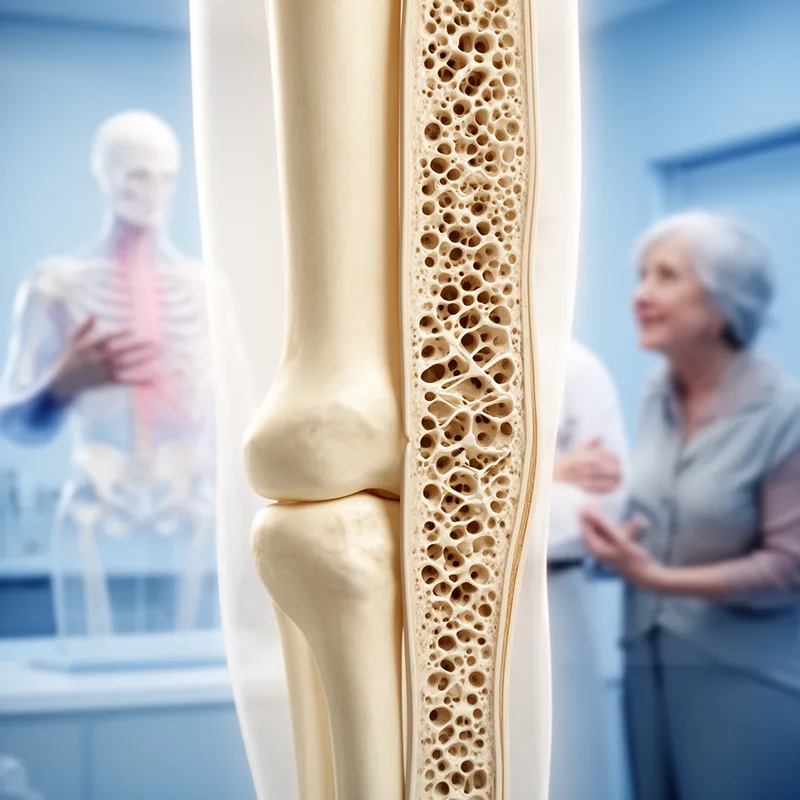
porosis
- noun
- /pəˈroʊsɪs/
- Specialized
- So osteo means bone, and not too surprisingly, porosis means porous.
Examples
-
Preceding the application of the Ilizarov external fixator, both patients had undergone multiple conventional procedures over a period of two months, causing disuse porosis of the whole limb.
Academic text (2007) -
Making an effort to reduce the construct weight, using carbon rings and judicious physiotherapy, is recommended for paediatric patients with preceding disuse porosis if the Ilizarov method is considered.
Academic text (2007) -
Osteoporosis is a common condition that leads to the porosis of bones, making them fragile and more likely to break.
-
For older adults, the risk of developing porosis increases due to a decrease in bone density over time.
-
The doctor explained that porosis can affect overall health by weakening bones and increasing the likelihood of fractures.
Antonyms


How Porous
- Specialized

- Specialized
 1
7.7
1
7.7
- Specialized
3
7.4
- Specialized
Surface Forms
Morphology
Etymology
The word porosis comes from the Greek root poros, meaning 'passage' or 'pore', and the ending -osis, meaning 'condition'. The same root appears in pore and porous, so porosis is a condition where bone or tissue becomes full of tiny holes and less dense.