

pondweed


 1
6.8
1
6.8
- noun
- /ˈpɒndˌwiːd/
- The pond in my backyard is filled with pondweed, providing cover for small fish.
Examples
-
While canoeing, we noticed patches of pondweed floating on the surface of the lake.
-
Slipping soundlessly from the edge of a bank into the green cloister of pondweed.
Fiction book (1990) -
This specimen of pondweed (Potamogeton amplifolius) resulted from the planting of a small four-leaved fragment that initially lacked a rhizome.
Academic text (1996) -
Many common names such as waterweed, pondweed, and riverweed are unwarranted but have probably originated because of the tendency for water plants to grow in luxuriant beds formed by vigorous vegetative growth.
Academic text (1996) -
For example, experiments in which vegetative fragments from both a native pondweed and introduced milfoil species were planted simultaneously show greater biomass productivity in the native species (Table 1; Les et al. 1988).
Academic text (1996) -
Along one stretch of highway, I came upon a bog, a wide, water-covered tract of land with mossy hummocks, dead trees, and aquatic plants such as lilies and pondweed.
Academic text (2009) -
Ducks often feed on pondweed as they glide across the calm waters of the pond.
Synonyms
 1
3.4
1
3.4
A plant that grows in or near water, like a water lily

A water plant with flat leaves that often float on ponds or slow rivers

A group of water plants called pondweeds that have long ribbon leaves and grow in ponds and slow rivers
Compounds
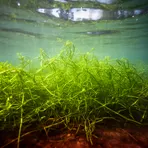
A water plant from North America that grows in lakes and ponds and often forms thick mats

- Specialized
A water plant with long curly leaves that grow under water in ponds and lakes


- Specialized
A water plant with floating leaves that grows in ponds and lakes in northern Europe and the United States
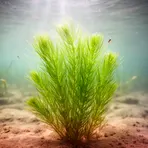
A water plant with thin leaves that grows in still or slow-moving fresh and slightly salty water


- Specialized
A water plant with leaves of different shapes that grows in lakes
How Invasive

Surface Forms
Morphology
Etymology
Pondweed is made from pond ('a small area of still water') and weed ('an unwanted plant'), so it names plants that grow in ponds and often spread to cover the water.