

polyzoan
- noun
- /ˈpɒlɪzoʊən/
- Specialized
- The scientist examined a cluster of polyzoans attached to the rocky sea floor.
Examples
-
Many polyzoans filter microscopic particles from the water using their tentacle-bearing ridges.
-
Polyzoans reproduce by budding, resulting in extensive colonies on submerged surfaces.
-
The polyzoan is often seen on rocks.
-
Many polyzoans thrive in coastal waters.
-
Polyzoans form colonies that can cover large areas of the ocean floor, resembling small patches of moss.
-
During his research, the marine biologist discovered several polyzoans thriving on the underside of a submerged rock.
-
Polyzoans are often found living in dense groups on seaweed, which provides them with a stable environment for growth.
Synonyms


 1
9.9
1
9.9
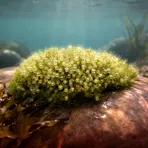
A small water animal that lives in groups and looks like moss
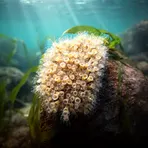
A small animal that lives attached to rocks or seaweed and forms moss-like groups with tiny tentacles
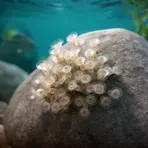
A small water animal that lives in groups attached to rocks and has a ring of tentacles used for feeding
Surface Forms
Morphology
polyzoan = polyzoa (opaque) = poly + zo + an
Although the term contains the classical elements poly- 'many' and zo- 'animal', the specialized zoological meaning is not readily recoverable for an average B1 learner.
Etymology
Polyzoan comes from the Greek parts poly- meaning 'many' and zoon meaning 'animal', the same root you see in zoo and zoology. So a polyzoan is literally 'many animals' — tiny animals living together in a colony on stones or seaweed, which explains why they form groups and reproduce by budding.