

moss animal
- noun
- /mɔs ˈænɪməl/
- Specialized
- In the aquarium, we saw how the moss animal formed a beautiful colony on the rocks.
Examples
-
PHOTO (BLACK & WHITE): Figure 26. An erect bryozoan, a moss animal, Figure 45, p. 32, from Ryland and Hayward (1991).
Academic text (1996) -
The moss animal, also known as a bryozoan, can often be found clinging to seaweed.
-
Scientists studied the moss animal for its unique ability to thrive in underwater environments.
Synonyms


 1
9.9
1
9.9
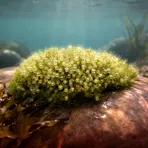
A small water animal that lives in groups and looks like moss

A small animal that lives attached to rocks or seaweed and forms groups of tiny animals with tentacles
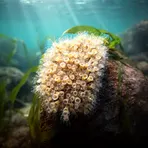
A small animal that lives attached to rocks or seaweed and forms moss-like groups with tiny tentacles

A group of small animals that grow like underwater moss on rocks or seaweed
Surface Forms
Morphology
This is a descriptive noun–noun compound where 'moss' modifies 'animal', so a learner who knows both words will reasonably infer it refers to an animal that is moss-like or associated with moss. Although the technical biological details (sessile colonial invertebrate with ringed tentacles) are not fully predictable, the core idea is directly compositional and cross-linguistically transparent.
Etymology
The noun moss animal comes from the way these tiny animals grow in water in colonies that look like green moss on rocks or seaweed. That's why today the name means a small water creature that sticks to rocks or seaweed and looks like moss.