
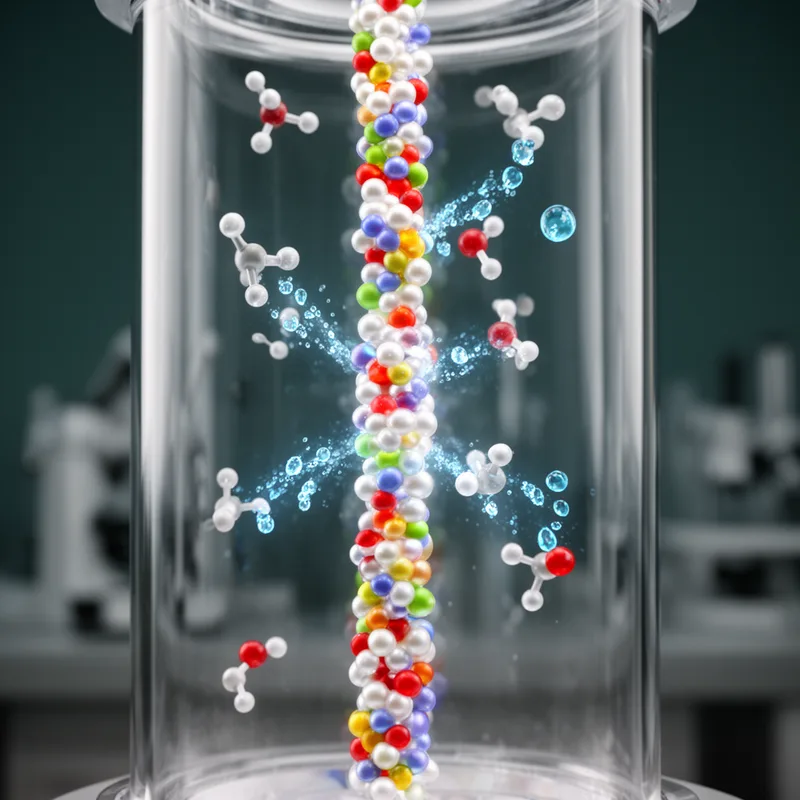
polycondensation
- noun
- /ˌpɒliˌkɒndənˈseɪʃən/
- Specialized
- During polycondensation, small molecules like water or methanol are released as byproducts.
Examples
-
Nylon is produced through a polycondensation reaction involving the elimination of water.
-
The polycondensation process is essential in manufacturing many synthetic fibers and plastics.
-
The process of polycondensation is vital in creating strong materials.
-
Polycondensation is fascinating!
-
Nylon is produced through a polycondensation reaction involving the elimination of water.
-
The polycondensation process is essential in manufacturing many synthetic fibers and plastics.
-
During polycondensation, small molecules like water or methanol are released as byproducts.
Synonyms
 1
8.6

A process that joins many small molecules into one long molecule like plastic

 1
8.2
A chemical process that joins two or more different small molecules to make a long plastic chain
Surface Forms
Morphology
polycondensation = condensation (semi-transparent) = poly + condens + ation
The word is built transparently from poly- plus condensation, but the chemical specialization makes it less immediately guessable for an average learner.
Etymology
Polycondensation combines poly- meaning 'many', as in polygon, and condensation from a root meaning 'to bring together' or 'make thicker'. So polycondensation describes a process where many small units join together and small molecules like water are released.