

polyclad
- adjective
- /ˈpɒlɪklæd/
- Specialized
- The scientist observed a polyclad flatworm under the microscope, noting its many branching digestive tubes.
Examples
-
Some corals have a polyclad structure that provides shelter for various marine species.
-
The diagram illustrated a polyclad arrangement of blood vessels in the organ.
-
The polyclad species exhibits a fascinating structure.
-
Many polyclad organisms thrive in diverse environments.
-
The scientist observed a polyclad flatworm under the microscope, noting its many branching digestive tubes.
-
Some corals exhibit a polyclad structure that allows them to adapt to various marine environments.
-
The diagram illustrated a polyclad arrangement of blood vessels that enhances nutrient distribution in the organism.
Synonyms
 1
5.1
1
5.1

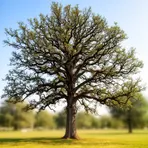
A tree or plant that has many branches


 1
4.2
1
4.2
Dividing into two or more branches, like a road that splits

Having many parts that come out from one main part like a tree or coral

Having parts that split and spread out like a tree

A branch that splits into more than two new branches in a family tree of species

Divided into more than two groups

Having a forked or branched shape in a body part

Having several rounded parts
How Branched

Surface Forms
Etymology
Polyclad comes from the Greek parts poly- 'many' and -clad 'branch', like in the word polygon which has many sides. So a polyclad form is 'many-branched', which is why scientists use it for structures with lots of branches.