
polyarteritis nodosa
- noun
- /ˌpɒliˌɑːrtəˈraɪtɪs noʊˈdoʊsə/
- Specialized
- Treatment of polyarteritis nodosa usually involves immunosuppressive medications to control the inflammation.
Examples
-
The doctor's research focused on rare diseases such as polyarteritis nodosa that affect the arteries.
-
After several tests, the patient was diagnosed with polyarteritis nodosa due to her persistent vascular symptoms.
-
The diagnosis of polyarteritis nodosa was confirmed after several tests.
-
Patients with polyarteritis nodosa often experience severe symptoms.
-
After several tests, the patient was diagnosed with polyarteritis nodosa due to her persistent vascular symptoms.
-
Treatment of polyarteritis nodosa usually involves immunosuppressive medications to control the inflammation.
-
The doctor's research focused on rare diseases such as polyarteritis nodosa that affect the arteries.
Synonyms

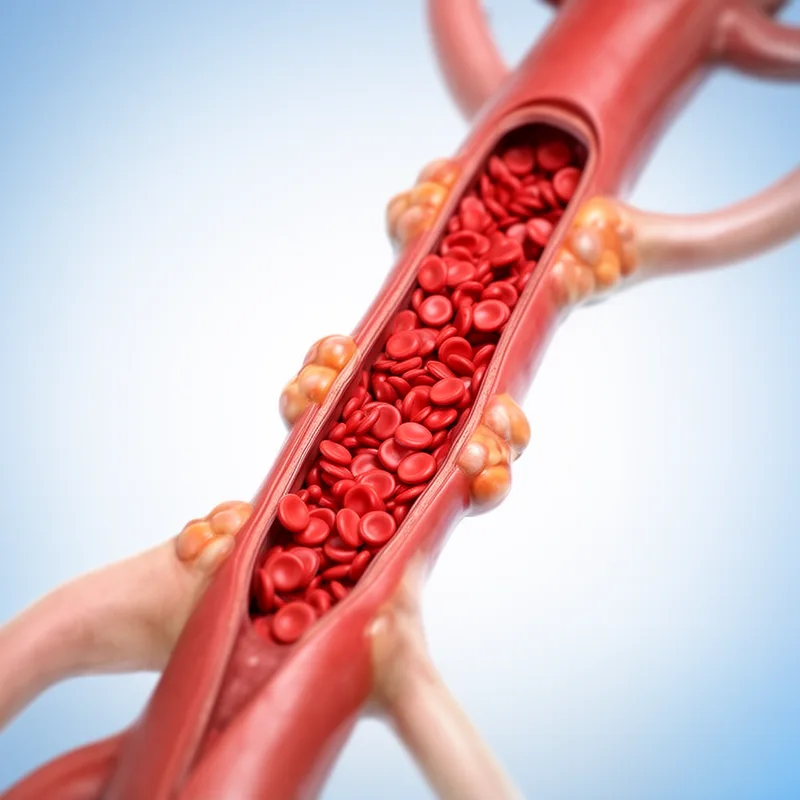
A disease in which small lumps form in arteries and reduce blood flow
Surface Forms
Morphology
polyarteritis + nodosa
The term is compositional: polyarteritis = inflammation of multiple arteries, and nodosa is a Latin-derived adjective meaning 'nodular' or 'with nodules', so the phrase straightforwardly denotes polyarteritis characterized by nodules along arteries. Although technical, the meaning follows directly from the constituent medical morphemes (which are similar across many languages), so a learner who knows both parts can derive the overall sense.
Etymology
Polyarteritis nodosa is a medical name built from word parts: poly- means 'many', arteritis means 'inflammation of the arteries', and nodosa means 'having nodules' or 'small lumps'. So the name paints an image of many swollen spots on arteries that can block blood flow, and that is why it describes a disease with nodules along medium-sized arteries.

