
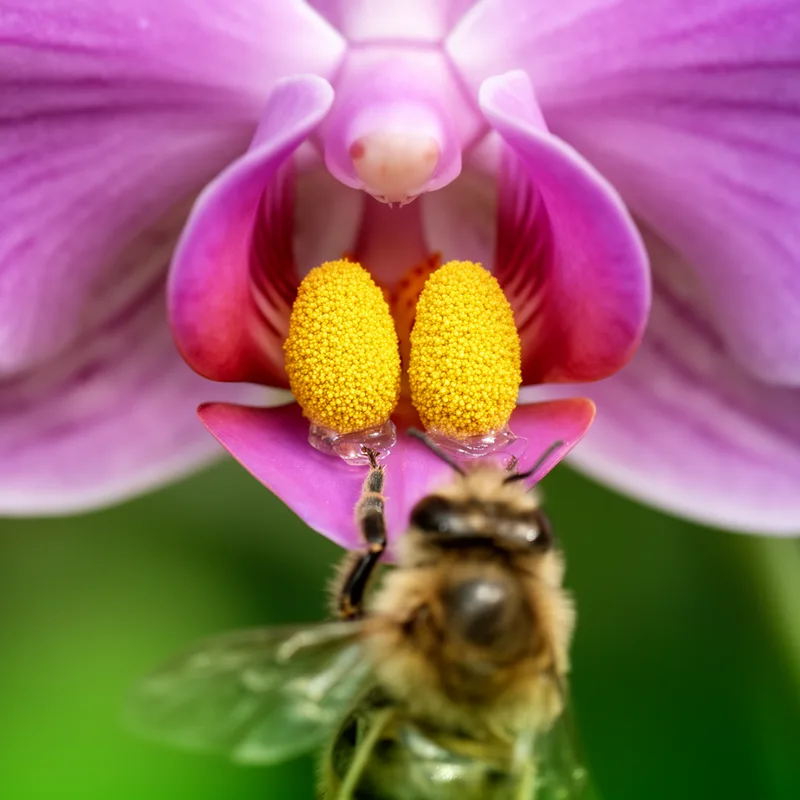
pollinium
- noun
- /pəˈlɪniəm/
- Specialized
- The orchid releases its pollinium when an insect visits the flower.
Examples
-
Researchers studied how the pollinium attaches to visiting bees during pollination.
-
A single pollinium can contain thousands of pollen grains in a compact form.
-
The pollinium is crucial for the fertilization of orchids.
-
In many orchids, the pollinium is transferred by insects.
-
A single pollinium can contain thousands of pollen grains in a compact form.
-
The orchid releases its pollinium when an insect visits the flower.
-
In many orchids, the pollinium is transferred by insects.
Synonyms
A part of some flowers that sticks to insects and carries pollen to make seeds
Surface Forms
Morphology
Etymology
The word pollinium comes from the Latin pollen, which means 'pollen' or 'dust' and is the same root as the everyday word pollen. That's why a pollinium is a compact packet of pollen grains often found in orchids, a small sticky ball that can stick to an insect and be carried to another flower.

