
pollenizer


 1
7.3
- noun
- /ˈpɒlənˌaɪzər/
- Specialized
- The success of the garden depended on having the right pollenizer for the flowering plants to thrive.
Examples
-
Farmers often rely on specific pollenizers to ensure a successful fruit crop from their orchards.
-
The researchers found that three varieties of pollenizers produced the most male flowers over the course of a season.
Blog text (13) -
First, they wanted to know which pollenizer varieties produce the most male flowers, since male flowers may serve as an indicator of pollen production.
Blog text (13) -
This is important because farmers want to time their planting so that the female flowers of seedless watermelons bloom at the same time as the male flowers of the pollenizers.
Blog text (13) -
Third, they wanted to know which pollenizers are most resistant to a fungal infection of the roots called Fusarium wilt—which can kill a plant.
Blog text (13) -
"All in all, this should help farmers make informed decisions about which pollenizers to plant with their seedless watermelons," says Dr. Chris Gunter, assistant professor of horticultural science at NC State and lead author of the paper.
Blog text (13) -
To increase the yield of her apple trees, she planted two varieties of pollenizers nearby.
Surface Forms
Morphology
pollenizer = pollenize (transparent) = pollen + ize + er
Formed regularly from the verb 'pollenize' by adding the agentive suffix '-er', producing a predictable agent noun.
Etymology
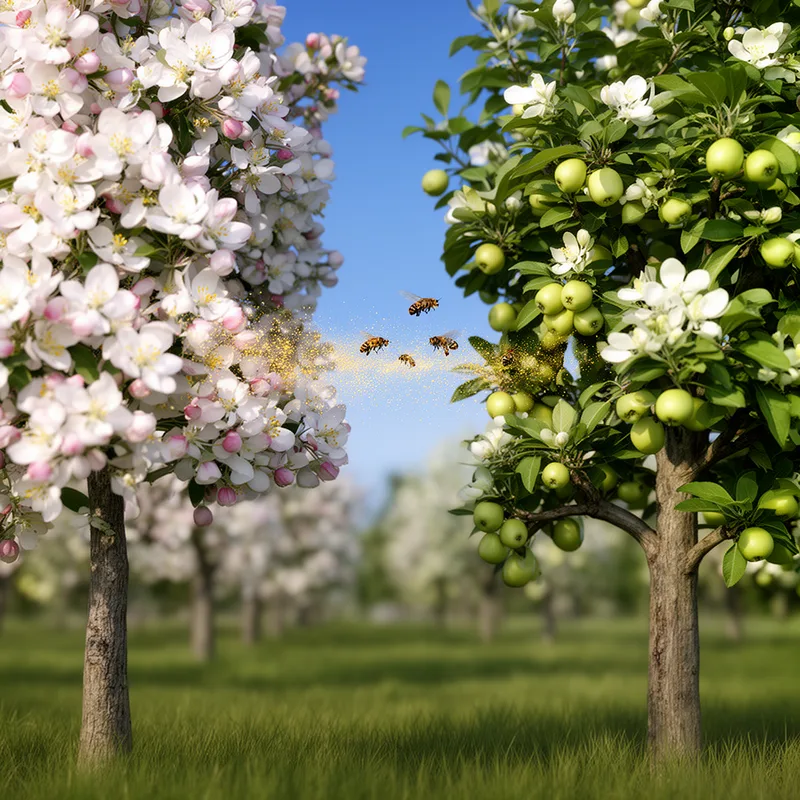
Pollenizer comes from pollen, the 'fine dust' that flowers make, and the ending -izer, which means 'one who provides'. So a pollenizer is a plant that gives compatible pollen to another plant so it can be fertilized and produce fruit.