
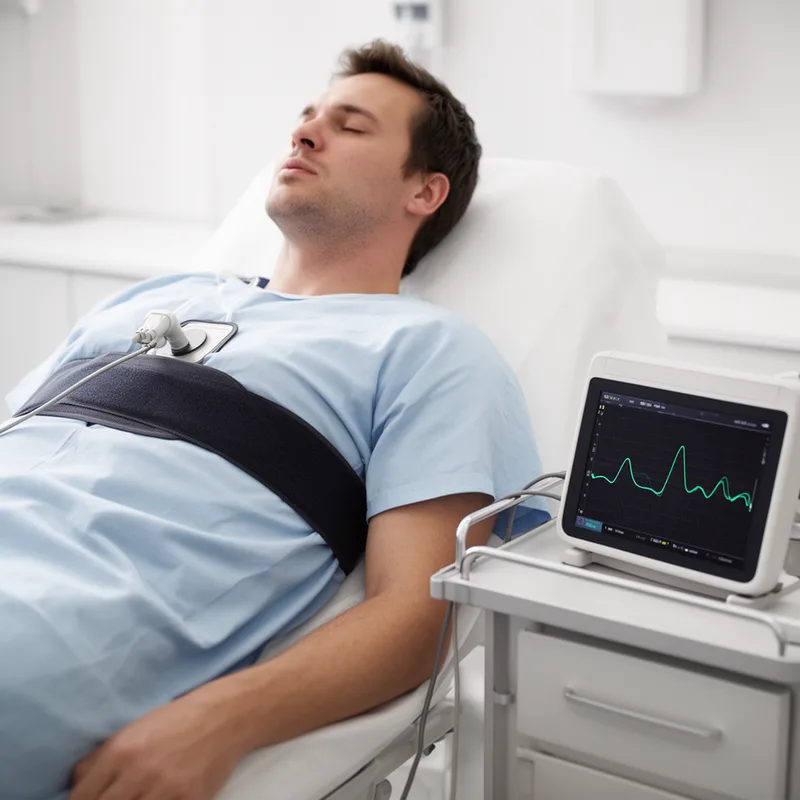
pneumograph
- noun
- /ˈnjuːməˌɡrɑːf/
- Specialized
- The doctor used a pneumograph to monitor the patient's breathing during the procedure.
Examples
-
The breathing is taken with the pneumograph around the subject's chest.
-
Physiological psychologists of the nineteenth century found ways of measuring emotional states by pulse and, more precisely, by clocks (reaction time), galvanometers, pneumographs, and other instruments involving word association.
Academic text (1993) -
Researchers equipped the athlete with a pneumograph to record lung activity while running.
-
The pneumograph displayed a detailed graph of the subject's chest movements as they breathed deeply.
Synonyms

 1
7.0
1
7.0

A machine that measures how much air you breathe in and how fast you breathe out


 1
9.1
1
9.1
A medical machine with a chamber that surrounds the body to measure lung size and how well you breathe
A device that records how deep and how fast someone breathes

A machine that measures breathing in people, animals or plants
Surface Forms
Morphology
Etymology
The word pneumograph comes from Greek roots: pneumo- meaning 'breath' and -graph meaning 'to write', the same -graph you see in photograph. So a pneumograph is a device that 'writes' the breath. It records how the chest and lungs move when you breathe.