
to pneumatize
- verb
- /njuːˈmæt.aɪz/
- Specialized
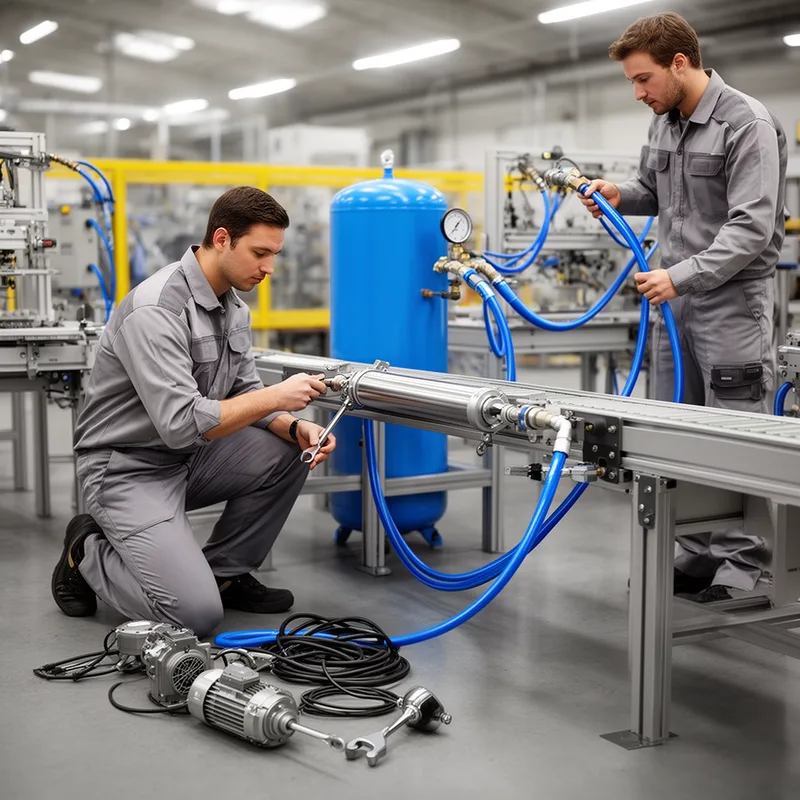
- The engineers decided to pneumatize the conveyor belt to improve efficiency.
Examples
-
After they pneumatized the doors, they could be opened with the push of a button.
-
Many modern factories pneumatize their equipment for faster and safer operation.
-
The engineers will pneumatize the new factory next month.
-
We need to pneumatize the delivery system for better efficiency.
-
The engineers decided to pneumatize the conveyor belt to improve efficiency.
-
Many modern factories pneumatize their equipment for faster and safer operation.
-
After they pneumatized the doors, they could be opened with the push of a button.
Surface Forms
Morphology
pneumatize = pneumatic (opaque) = pneumat + ize
The combining form 'pneumat-' (relating to air) is rare and unfamiliar to average learners, so they will not reliably infer the technical sense from the parts.
Etymology
The word pneumatize comes from the Greek root pneuma meaning 'air' or 'breath', and you can see the same root in pneumatic. So to pneumatize a machine is to make it work with compressed air, which explains the modern meaning.

