

plinth
 2
8.4
2
8.4

- noun
- /plɪnθ/
- Perhaps that bronze statue of John Harvard is sitting on his plinth, thinking.
- plinth and pedestal
- low plinth
Examples
-
At their feet, carved in the stone plinth, the dedication reads, "To our heroines and dear children."
Academic text (2000) -
There was a shortage of room on the plinth, so Lerambert simply added two small platforms for the feet that extend beyond it.
Academic text (2001) -
The edge of the plinth was only six inches away.
Fiction book (1991) -
The miscreant was brought to stand on the plinth in the center of the square.
Fiction book (1991) -
The sarcophagi stand on tall plinths and lead the eye up to further plinths beneath the half-columns.
Academic text (1992) -
With no thought to adding figures to the base in this initial phase, Tacca designed a plinth that narrowed from a stepped square base at the bottom to a rectangular pedestal on the top.
Academic text (2015) -
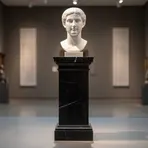
The statue stood proudly on its plinth, showcasing intricate details for all to admire.
-
Workers placed the new sculpture carefully on the plinth to ensure it was stable.
-
A tall stone plinth supported the monument, making it visible from a distance.
Synonyms
 24
4.5
24
4.5
A base that holds a statue, column, or vase
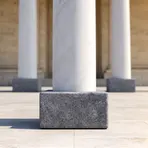
A low stone base that supports a statue, column, or wall

A low base that supports a column or statue

A low base placed under heavy things such as a statue or column

A long decorated panel that shows small scenes below a church painting
How Tall

Surface Forms
Etymology
Plinth comes from the Greek word plinthos, meaning 'brick' or 'slab'. So a plinth is like a big flat 'brick' or tile that holds up a statue or column.